
Fertility and testosterone are powerful marketing words. They touch identity, confidence, aging, sexuality and the desire to feel in control. That is why claims around male bodywork need special caution. A traditional practice may be meaningful, relaxing or culturally important, but it should not be advertised as a proven way to raise testosterone, improve sperm count, reverse infertility or cure erectile dysfunction.
This article explains the basics. Sperm production, testosterone signaling and fertility depend on hormones, testicular function, genetics, heat exposure, varicocele, infection, medication, anabolic steroid use, diabetes, lifestyle, timing and partner factors. Some variables can be measured. Some can be treated. Others need specialist review. None should be guessed from how a session feels.

What the testicles actually do
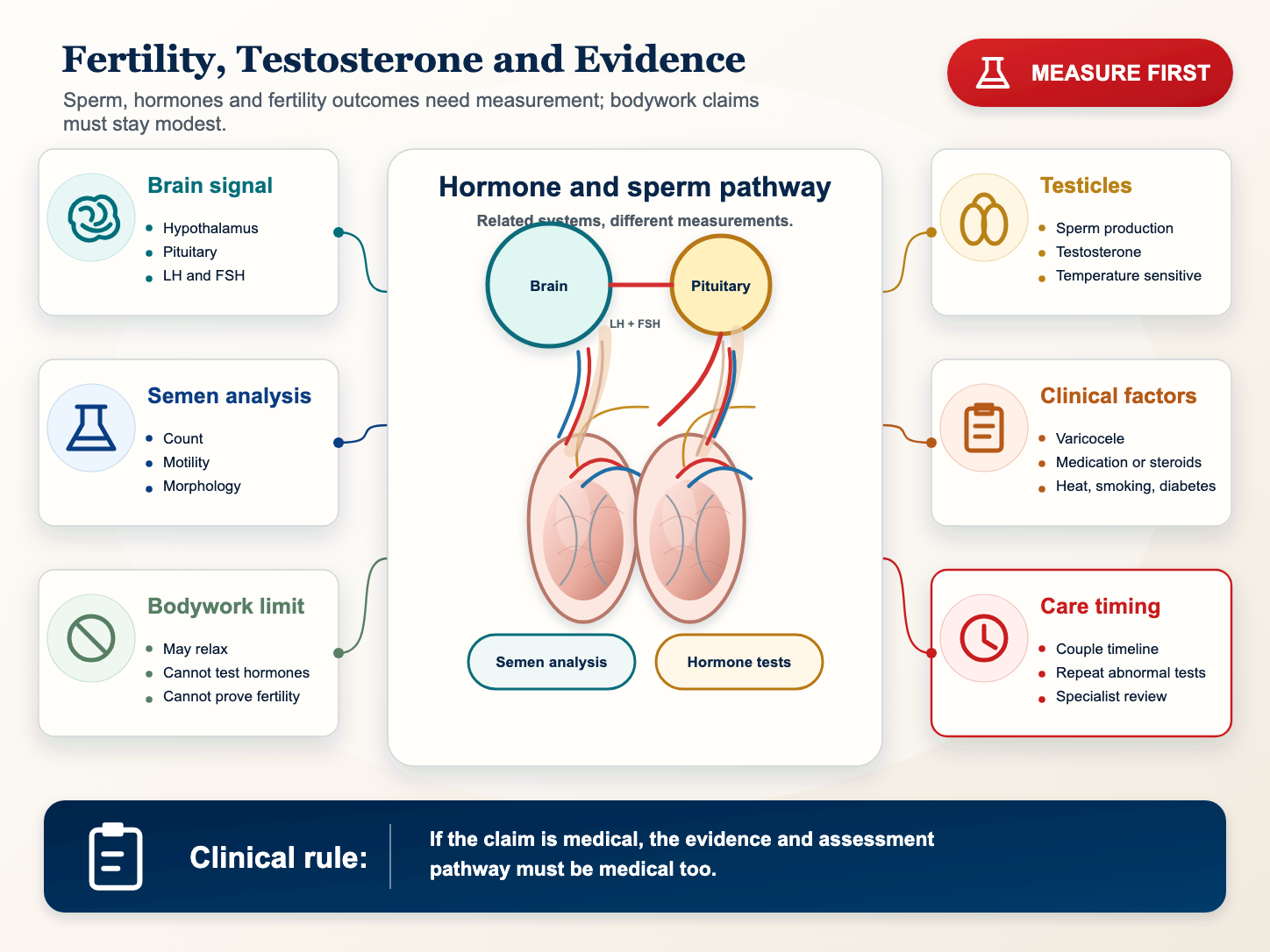
The testicles have two major roles: producing sperm and producing testosterone. These processes are related but not identical. A man can have testosterone concerns without a full fertility picture, and fertility concerns can exist even when sexual function feels normal. Sperm production is a long biological process influenced by hormones, temperature, illness, medication, toxins, genetics and time.
The testicles also need safe blood flow and normal surrounding structures. Conditions such as varicocele, infection, trauma, torsion history, undescended testicle history or prior surgery may matter. Because the system is measurable, serious fertility discussion should move toward semen analysis and medical history rather than promises based on touch.
The hormone pathway is not a simple switch
Testosterone production is controlled through signaling between the brain and the testicles. The hypothalamus and pituitary help regulate hormones that tell the testicles what to do. Sleep, illness, medications, obesity, anabolic steroids, opioid use, pituitary problems and testicular disease can all affect the pathway. That means low testosterone symptoms need evaluation, not guesswork.
Bodywork cannot tell whether a testosterone problem is primary, secondary, temporary, medication-related or not present at all. Blood tests must also be interpreted carefully because levels vary by time of day, health status and laboratory method. A responsible educational site should encourage measured assessment rather than selling a sensation as endocrine evidence.
Fertility is measured, not inferred
Male fertility concerns usually start with semen analysis. The result may look at sperm count, concentration, motility, morphology, semen volume and other features depending on the lab. One test may not tell the whole story, and results can vary, but it gives a better starting point than assumption. If results are abnormal, a reproductive urologist may consider history, examination, hormones, varicocele, genetics, infection or other factors.
This is where many traditional claims become unsafe. If someone says a massage will improve fertility, ask what outcome is being measured and where the evidence is. Does the claim mean the person feels more relaxed? Or does it mean sperm count, motility or morphology changed on lab testing? Those are very different claims.
- Semen analysis can provide objective information about sperm count, movement and shape.
- Fertility involves both partners and should not be blamed on one body without evaluation.
- Anecdotes should not replace testing when pregnancy has not occurred after an appropriate period of trying.
Common factors that deserve clinical attention
Several factors can affect male fertility. Varicocele is often discussed because enlarged veins around the testicle can be associated with fertility issues in some men. Infections, hormone disorders, genetic conditions, prior testicular injury, heat exposure, smoking, heavy alcohol use, some medications, anabolic steroids and certain medical conditions may also matter. Age can influence sperm quality as well, although the pattern is different from female fertility.
The important point is not to memorize every cause. It is to notice that many causes are not visible from the outside and cannot be corrected by forceful manual work. A clinician can decide which history, examination, lab tests or imaging are appropriate. Delaying that evaluation because a practitioner promised fertility improvement can waste time and create unnecessary guilt.
Testosterone marketing can be misleading
Low libido, fatigue, mood changes, weight gain, poor sleep and erection changes are often blamed on low testosterone. Sometimes testosterone is involved. Sometimes the pattern is driven by stress, depression, sleep apnea, medication, diabetes, relationship strain, cardiovascular health or other conditions. Symptoms alone do not prove a hormone diagnosis.
This matters because testosterone treatment can affect fertility. External testosterone can reduce sperm production in some men by suppressing the hormonal signals that drive the testicles. Men who want future fertility should discuss this specifically with a qualified clinician before starting hormones, supplements or performance products. Bodywork claims should not distract from that medical reality.
Why normal sexual function does not rule out fertility issues
A common misunderstanding is that erections, libido and ejaculation prove fertility. They do not. Sexual function and sperm quality can overlap, but they are not the same measurement. A man may have normal erections and still have low sperm count, poor motility, abnormal morphology or another fertility factor. Another man may have erection difficulty from stress or vascular risk while semen analysis is not the main issue.
This distinction protects readers from both shame and false reassurance. Fertility is a couple-level outcome and a measurable medical topic. It should not be judged by confidence, session sensation or a practitioner opinion. When pregnancy is the goal and it is not happening, testing gives a clearer direction than guessing from sexual performance.
Supplements, heat and lifestyle claims
Fertility marketing often includes supplements, detox language, heat warnings, cold exposure, pelvic circulation claims and lifestyle promises. Some lifestyle factors do matter. Smoking, heavy alcohol use, anabolic steroids, high heat exposure, poor sleep, metabolic disease and some medications can influence reproductive health. But the responsible way to discuss them is specific and measured, not dramatic.
Readers should be cautious with packages that combine supplements, massage and hormone promises without testing. A healthier approach is to review risk factors with a clinician, use semen analysis when indicated, and make changes that are safe for general health. If a product or practice claims to change sperm or testosterone, the claim should be judged by evidence, not by how confident the marketing sounds.
Where relaxation may still help
A cautious article should not pretend that relaxation is worthless. Stress, sleep, body image and sexual confidence can influence how a person feels and functions. Safe bodywork may help some people feel calmer, less guarded or more connected to the body. Breath, rest and respectful touch can be part of a broader wellbeing plan.
The boundary is the claim. Relaxation is not the same as treating infertility. Feeling better after a session is not proof that testosterone increased or sperm quality changed. The safest wording is modest: bodywork may support general wellbeing for some adults when consent, hygiene and contraindications are respected. It should not be sold as a substitute for fertility evaluation.
Jab Kasai claims need the highest caution
Jab Kasai is often associated online with male vitality, pelvic circulation and sexual energy. Those phrases can be part of traditional or commercial language, but they should not become medical promises. Fertility, testosterone and erectile function are measurable or clinically assessable issues. A practitioner who guarantees improvement without testing is making a claim that exceeds responsible bodywork scope.
The safest way to discuss Jab Kasai in this area is to separate layers. Cultural context belongs in one layer. Relaxation and body awareness belong in another. Medical fertility, hormones, infection, varicocele and testicular disease belong in clinical care. Mixing them into one promise creates confusion and can delay useful evaluation.
When to seek fertility evaluation
Couples often seek evaluation after trying to conceive for a period without pregnancy, and sooner when age, known conditions, prior surgery, chemotherapy, testicular injury, abnormal puberty, sexual dysfunction or other risk factors exist. The right timing depends on the situation and partner factors. A primary clinician, urologist or reproductive specialist can guide the next step.
Men should also seek medical advice for testicular lumps, swelling, persistent pain, changes in testicle size, history of undescended testicle, erection changes with cardiovascular risk, or symptoms of hormone imbalance that persist. These concerns are not embarrassing side notes. They are exactly the information that helps clinicians choose useful evaluation.
What to bring to a fertility or hormone visit
Preparation makes the visit more useful. Bring the timeline of trying to conceive, prior pregnancies with any partner, surgery history, testicular injury history, childhood undescended testicle history, infections, medications, supplements, anabolic steroid exposure, heat exposure, smoking, alcohol, cannabis or other drug use, and major illnesses. If semen analysis has already been done, bring the full report rather than a summary screenshot.
For hormone concerns, note sleep, weight change, mood, libido, erections, morning erections, exercise, medication, opioid use, anabolic steroid history and timing of blood tests. This information helps a clinician decide what is relevant. It also keeps the conversation away from vague claims that a practice can restore masculinity without measuring anything.
- Bring semen analysis results when available.
- List medications, supplements and anabolic steroid exposure honestly.
- Mention testicular pain, lumps, swelling or size changes directly.
How to place bodywork beside medical care
If a man enjoys safe traditional bodywork, it can remain a wellbeing choice as long as expectations are honest. It may help relaxation, breathing awareness, body confidence or stress reduction. It should not be used to explain lab values, replace semen analysis, override a doctor, or pressure a partner to wait longer before evaluation.
The safest relationship is transparent. Tell the clinician what practices are being used if they involve the pelvis, testicles, supplements, heat, pressure or claims about fertility. Tell the practitioner when fertility or hormone evaluation is underway. A serious practitioner will not feel threatened by medical care. A serious clinician will focus on safety, evidence and measurable outcomes.
A responsible decision rule
If the goal is fertility, hormones or persistent sexual function change, use measurable care first. That may include semen analysis, medical history, examination, blood tests or referral. If the goal is relaxation or cultural exploration, keep the language honest and the boundaries clear. Do not let a wellness session become the reason that testing is postponed.
The most respectful message is also the most practical: male fertility and testosterone concerns are real health topics. They deserve neither shame nor miracle promises. Bodywork can sit beside health care only when it knows its limits. The body deserves comfort, but it also deserves evidence when the question is medical.
Any claim that bodywork can raise testosterone, reverse infertility or improve semen analysis should be treated as unproven unless supported by appropriate medical evidence.