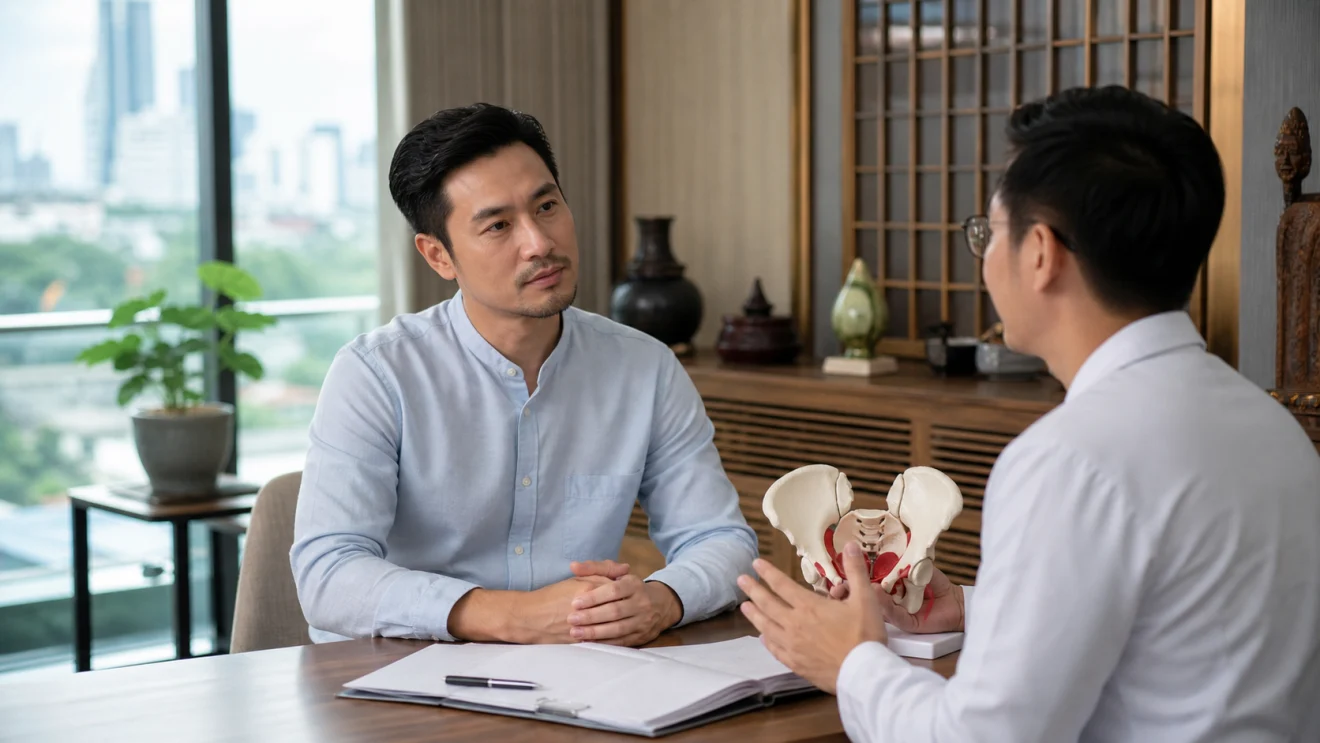
Male health problems are often discussed in a confusing language of shame, performance, vitality, energy and cure. A man may be dealing with erection changes, pelvic pain, premature ejaculation, low libido, urinary urgency, testicular discomfort, fertility worry, prostate anxiety, chronic stress, sleep loss or a mix of several issues at once. Because the symptoms feel intimate, many readers look for a private answer before they talk to a clinician. That is understandable, but it can also make them vulnerable to overconfident promises.
This article offers a more useful map. It separates medical care, rehabilitation, mental health support, lifestyle changes and traditional bodywork. Thai massage and related wellbeing practices can have a supportive role for some adults, especially when the goal is comfort, relaxation, body awareness or general stress reduction. They should not be sold as a replacement for urology, primary care, pelvic floor physiotherapy, fertility evaluation, sexual-health care or urgent assessment when red flags are present.
Begin with triage, not treatment shopping
The first question is not which alternative treatment sounds appealing. The first question is whether the symptom pattern is safe to manage as routine. Sudden severe testicular pain, swelling, fever, blood in urine, inability to urinate, pelvic pain with chills, a new testicular lump, trauma, chest pain with erection problems, neurological symptoms or severe pain after a procedure should move toward medical assessment. A massage room, supplement plan or online protocol cannot rule out emergencies.
Triage is not meant to frighten people. It protects time-sensitive problems and also protects ordinary wellbeing choices. Once danger has been considered, the decision becomes calmer. A person with occasional stress-related tension may choose relaxation support. A person with persistent erectile dysfunction and cardiovascular risk deserves medical review. A person with chronic pelvic pain may need a pelvic floor assessment. These are different situations, even if online marketing uses the same words for all of them.
- Urgent signs come before any massage, stretching, supplement or traditional explanation.
- Persistent symptoms deserve a professional pathway rather than repeated guessing.
- Supportive care works best when the medical question has been named honestly.
The main medical layers for male concerns
Primary care is often the safest first doorway because it can screen cardiovascular risk, diabetes, medication effects, infection signs, mental health strain and general health changes. Urology becomes important for urinary symptoms, prostate concerns, testicular pain, fertility questions, ejaculation pain, blood in urine or persistent pelvic symptoms. Endocrinology or a clinician experienced in hormones may be relevant when low testosterone is suspected, but symptoms alone do not prove a hormone diagnosis.
Sexual-health medicine and sex therapy can help when the concern involves performance anxiety, pain during sex, relationship communication, premature ejaculation, delayed ejaculation, trauma history or avoidance. Fertility specialists may be needed when pregnancy is not occurring after an appropriate period or when semen analysis is abnormal. The key idea is not that every man needs every specialist. The key idea is that different problems require different evidence, and one manual technique should not be asked to solve all of them.
Pelvic floor physiotherapy as a bridge between medicine and function
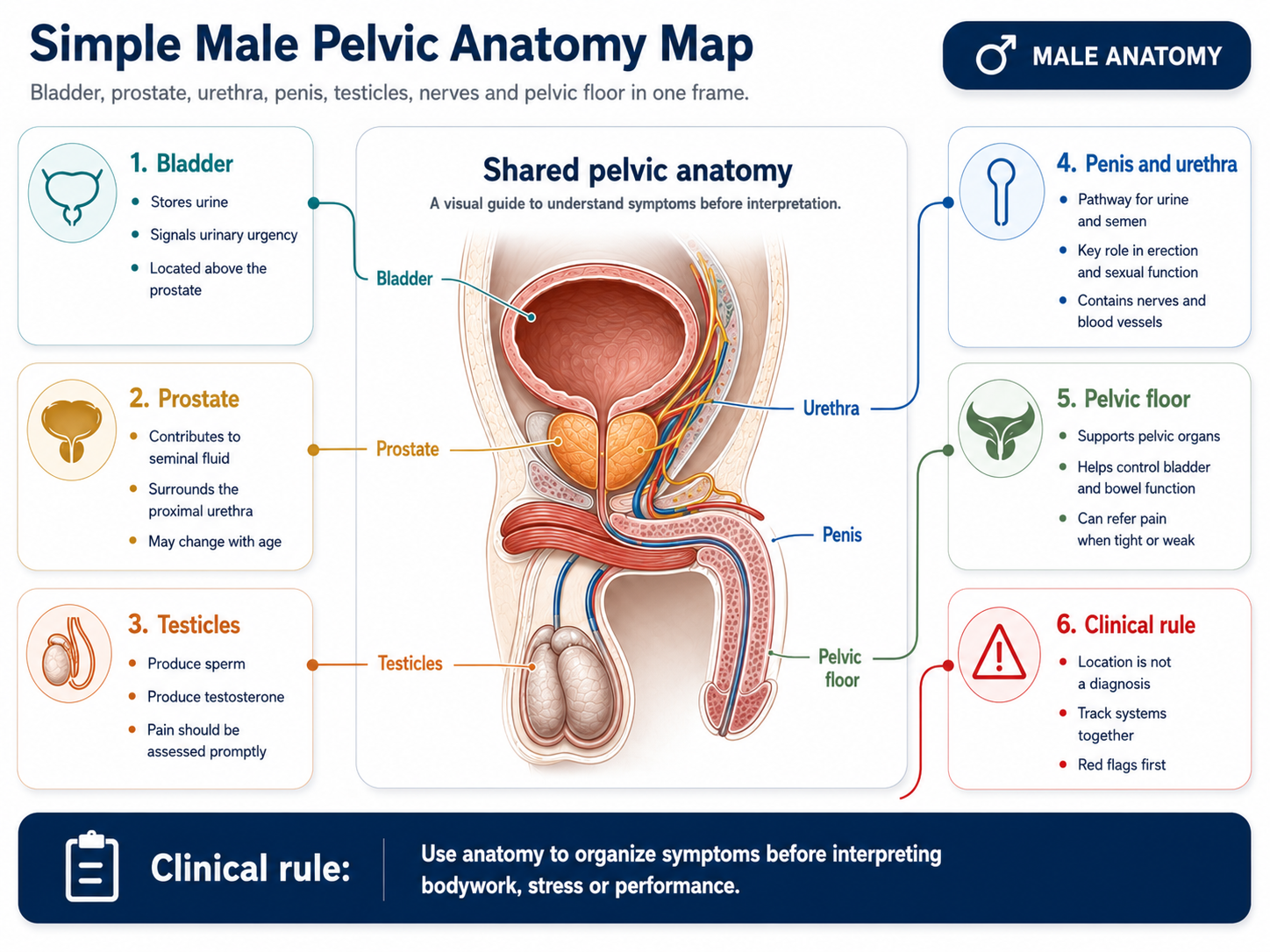
Male pelvic floor physiotherapy deserves special attention because it sits between medical evaluation and daily function. The pelvic floor can be too tense, poorly coordinated, weak after surgery, overprotective after pain, or involved in urinary, bowel and sexual symptoms. Assessment may include history, breathing, posture, hip mobility, abdominal pressure, sitting tolerance, urinary habits, bowel patterns and consent-based examination when appropriate.
On this site, the internal guide to pelvic floor therapy for men explains why the answer is not always strengthening. Some men need down-training, relaxation, breathing coordination and pain education. Others need gradual strengthening or post-surgical rehabilitation. Blindly doing Kegels, forcing stretches or using painful pressure can make some tense pain patterns worse. A useful care plan starts with assessment rather than a universal exercise list.
- Pelvic floor care can support urinary control, pain patterns, coordination and post-prostate rehabilitation.
- Relaxation work can be as important as strengthening when muscles are guarding.
- Painful pressure is not proof that treatment is effective.
Where Thai massage can fit safely
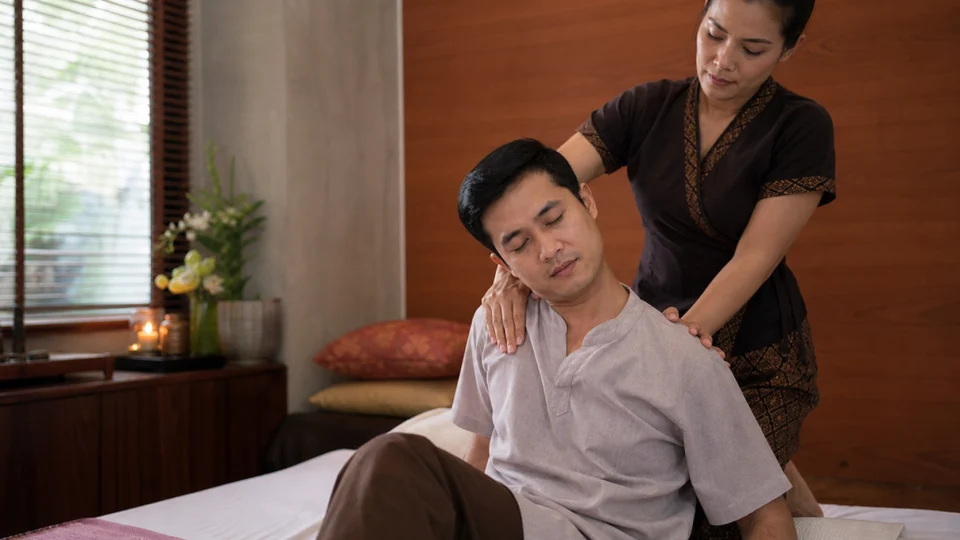
Thai massage can be useful to discuss when it is framed as supportive bodywork. Traditional Thai massage may include assisted stretching, rhythmic compression, pressure along muscle lines, joint mobility, breath, rest and a therapeutic environment. For some adults, that can reduce perceived stress, improve comfort, encourage body awareness and make the body feel less guarded. Those benefits can matter, especially when stress and muscular tension amplify symptoms.
The word palliative needs care. In this context it should mean comfort-oriented support, not end-of-life care and not a cure. Thai massage may be palliative in the small practical sense that it can help a person feel calmer, more mobile or less tense while the real medical question is being handled elsewhere. If the concern is prostatitis, infertility, erectile dysfunction, urinary obstruction, low testosterone or testicular disease, the medical pathway still matters. A relaxing session should never become the reason testing or evaluation is delayed.
Alternative does not mean anti-medical
Many readers use the word alternative because they want something more human than a rushed appointment. That desire is legitimate. Men often need more time, dignity and privacy than ordinary health systems provide. But alternative care becomes unsafe when it positions itself against evidence. A better word is complementary: a practice may sit beside medical care when it does not contradict, delay or replace it.
For male concerns, this distinction is crucial. Massage cannot diagnose infection, measure sperm quality, assess testosterone signaling, treat vascular erectile dysfunction, rule out cancer, correct urinary retention or evaluate testicular torsion. It can support relaxation, reduce general muscular tension, provide a nonjudgmental wellness setting and help some people reconnect with the body. Those are meaningful outcomes, but they are not the same as disease treatment.
How to choose a Thai massage setting responsibly
The safest massage setting is professional, non-erotic, clear about scope and comfortable with boundaries. The client should know what clothing or draping is used, which body areas are included, how pressure is adjusted, how to stop, and what symptoms make massage inappropriate. A serious practitioner should not promise to cure erectile dysfunction, prostatitis, infertility, low testosterone, trauma or chronic pelvic pain. Honest limits make the practice more trustworthy, not less.
For a reader comparing Bangkok wellness options, a venue such as Loft Thai Spa may appear in the search for best massage in bangkok, but the health decision still needs a safety filter: choose non-intimate therapeutic work, explain relevant symptoms, avoid pressure when pain is acute, and keep medical care separate when the problem is clinical. A spa visit can be a comfort choice; it should not be treated as a diagnostic appointment.
Erection changes need cardiovascular and medication context
Erection changes are one of the most common reasons men look for alternative answers. Occasional difficulty can happen with stress, fatigue, alcohol, relationship pressure or a difficult week. Persistent erectile dysfunction is different. It may involve blood vessels, nerves, diabetes, blood pressure, cholesterol, smoking, medication, depression, sleep apnea, hormone issues or pelvic pain. Because erections depend on vascular health, recurring problems can be a general health signal.
Thai massage may help some people lower stress or feel more comfortable in the body, which can support sexual confidence indirectly. It should not be advertised as a cure for erectile dysfunction. A man with persistent changes, risk factors, chest symptoms, diabetes, high blood pressure, medication changes or sudden onset should seek medical advice. Evidence-based care may include lifestyle changes, medication review, cardiovascular risk management, counseling, sex therapy or approved ED treatments. Relaxation can accompany that pathway, but it should not replace it.
Pelvic pain and prostatitis-like symptoms are often mixed
Pelvic pain in men can appear in the perineum, testicles, penis, groin, lower abdomen, rectal area, hips or back. It may flare with sitting, urination, ejaculation, bowel movements, cycling, stress or heavy lifting. Some cases involve infection or prostate inflammation. Others look more like chronic pelvic pain syndrome, with muscle guarding, nerve sensitivity, bladder habits, bowel strain and psychosocial stress all contributing.
This is exactly where a careful complementary approach can be useful but limited. Gentle relaxation, breath, heat tolerance, sleep, stress reduction and non-intimate bodywork may help the nervous system downshift. But deep or aggressive pressure near painful areas can aggravate guarding. If there is fever, burning urination, blood, acute worsening, retention or severe pain, the path is medical. If the pattern is chronic and non-urgent, pelvic floor physiotherapy and urology are usually more targeted than general massage alone.
Testicular symptoms require the most conservative rule
Testicular pain, swelling, heaviness, lumps and sudden changes should be handled conservatively. The testicles are sensitive organs with blood supply and structures that can be affected by torsion, infection, trauma, hernia, varicocele, hydrocele, cysts, cancer or referred pelvic pain. A practitioner cannot feel those possibilities and safely rule them out during a massage session. Sudden severe pain is especially important because some causes are time-sensitive.
For this reason, Thai massage should avoid intimate interpretation of testicular symptoms. A person can choose ordinary non-intimate massage for general relaxation when there are no red flags, but testicular pain itself is not a massage indication. New lumps, swelling, persistent heaviness, pain with fever, trauma or sudden one-sided pain should be directed toward medical care. This conservative rule protects the reader and also protects legitimate bodywork from being pulled into medical claims it cannot support.
Fertility and testosterone questions need measurements
Fertility and testosterone are often used in wellness marketing because they connect to identity and aging. The biology is more specific. Male fertility may require semen analysis, medical history, examination, hormone tests, imaging or reproductive urology depending on the case. Testosterone assessment requires appropriate blood testing and clinical interpretation. Symptoms such as fatigue, low libido, mood change or erection difficulty can have many causes and do not prove low testosterone by themselves.
Massage can support sleep, stress reduction and general wellbeing for some adults. It cannot prove that sperm count improved, testosterone rose or a varicocele changed. Men who want future fertility should be particularly cautious with hormone products and performance supplements because some interventions can reduce sperm production. If the goal is fertility or endocrine care, use measurable medical evaluation first. Use Thai massage as comfort, not as a fertility protocol.
Mental health, shame and the need for dignified care
Male sexual and pelvic symptoms often create shame before they create a diagnosis. A man may avoid care because he fears being judged, exposed or dismissed. This is one reason alternative settings feel appealing: they may seem quieter, warmer and less clinical. A good care plan should learn from that. Medical care is more effective when it is respectful, private and clear.
Mental health support, sex therapy and relationship communication can be legitimate parts of care. Anxiety, depression, trauma history, performance pressure, body image and partner dynamics can all affect symptoms. This does not mean symptoms are imaginary. It means the nervous system and social context matter. Thai massage may be one calming ritual among several, but if fear, avoidance or distress is strong, qualified psychological or sexual-health support may be more appropriate than repeated bodywork sessions.
Lifestyle changes are boring because they are real
Sleep, physical activity, smoking, alcohol, metabolic health, medication review, stress load and cardiovascular risk are not glamorous topics, but they often matter. Erectile function, hormone balance, pain sensitivity, urinary symptoms and mood can all be influenced by general health. A person who ignores diabetes risk, high blood pressure, sleep apnea or heavy alcohol use while shopping for miracle bodywork is missing the most useful layer.
This does not mean lifestyle advice should become blame. Many men already feel blamed for their symptoms. The better frame is agency: small changes can support medical care and improve resilience. Walking, strength training when safe, sleep improvement, weight management when relevant, reduced smoking, moderated alcohol, hydration and better bowel habits may all help the system. Thai massage can be part of a broader rest-and-recovery rhythm, but it cannot carry the whole plan.
Questions to ask before using complementary care
Before choosing Thai massage, acupuncture, supplements, breathwork, stretching or any other complementary route, ask what problem the practice is actually addressing. Is it pain intensity, stress, mobility, fear, sleep, body awareness or a diagnosed medical condition? How will improvement be measured? What symptoms mean stop? What care should continue in parallel? Who is qualified to answer the medical part?
Good complementary care should welcome these questions. It should not require secrecy or loyalty. It should not tell the client to stop medication, avoid doctors, ignore tests or interpret worsening symptoms as detox. It should not use embarrassment as a sales tool. If a practitioner can name limits, contraindications and referral points clearly, the setting is more credible.
- What exactly is the goal: comfort, mobility, stress reduction or a medical outcome?
- Which red flags would stop the session and require medical care?
- How will the practitioner avoid intimate, coercive or diagnostic claims?
A practical decision map
If symptoms are sudden, severe, feverish, bloody, traumatic or associated with urinary retention, choose medical care first. If symptoms are persistent but not urgent, start with primary care, urology, pelvic floor physiotherapy, sexual-health care or fertility evaluation depending on the pattern. If the main issue is stress, tension, sleep loss or general body discomfort after red flags have been excluded, Thai massage can be considered as supportive wellbeing.
The cleanest formula is simple: diagnose medically, rehabilitate functionally, support the nervous system humanely. Thai massage belongs mostly in the third layer. It may also support mobility and relaxation in the second layer when coordinated with a clinician or physiotherapist, but it should not claim the first layer. That boundary lets the reader benefit from traditional care without giving up medical clarity.
Bottom line
Male health problems deserve more than silence and more than miracle claims. A mature approach can include medical evaluation, pelvic floor rehabilitation, mental health support, lifestyle work and carefully chosen traditional bodywork. Thai massage can be a valuable comfort practice for some adults when it is professional, non-intimate, consent-based and honest about its limits.
The safest message is not anti-massage. It is anti-confusion. When the issue is clinical, use qualified care. When the goal is relaxation, recovery and body awareness, choose a serious practitioner and keep expectations modest. A good complementary practice should make a person feel supported without asking him to ignore symptoms, delay evaluation or believe that comfort is the same as cure.
Use Thai massage as supportive wellbeing only after red flags have been excluded. Do not use massage to investigate sudden testicular pain, fever, urinary retention, blood, new lumps, persistent erectile dysfunction with cardiovascular risk, or fertility and hormone concerns that need testing.