
Modern prostate radiotherapy is planned with remarkable precision, but precision does not make the pelvis emotionally simple. A man may be told about cancer control, treatment sessions and follow-up scans, then only later realize that erections, orgasm, urinary comfort and confidence also need a plan.
A new 2026 systematic review on radiation-induced erectile dysfunction gives JABKASAI readers a useful starting point. Its message is not that every man will lose erectile function, and it is not that any single technique can remove all risk. The stronger lesson is that erection changes after prostate radiation are multifactorial, personal and worth discussing before treatment begins.
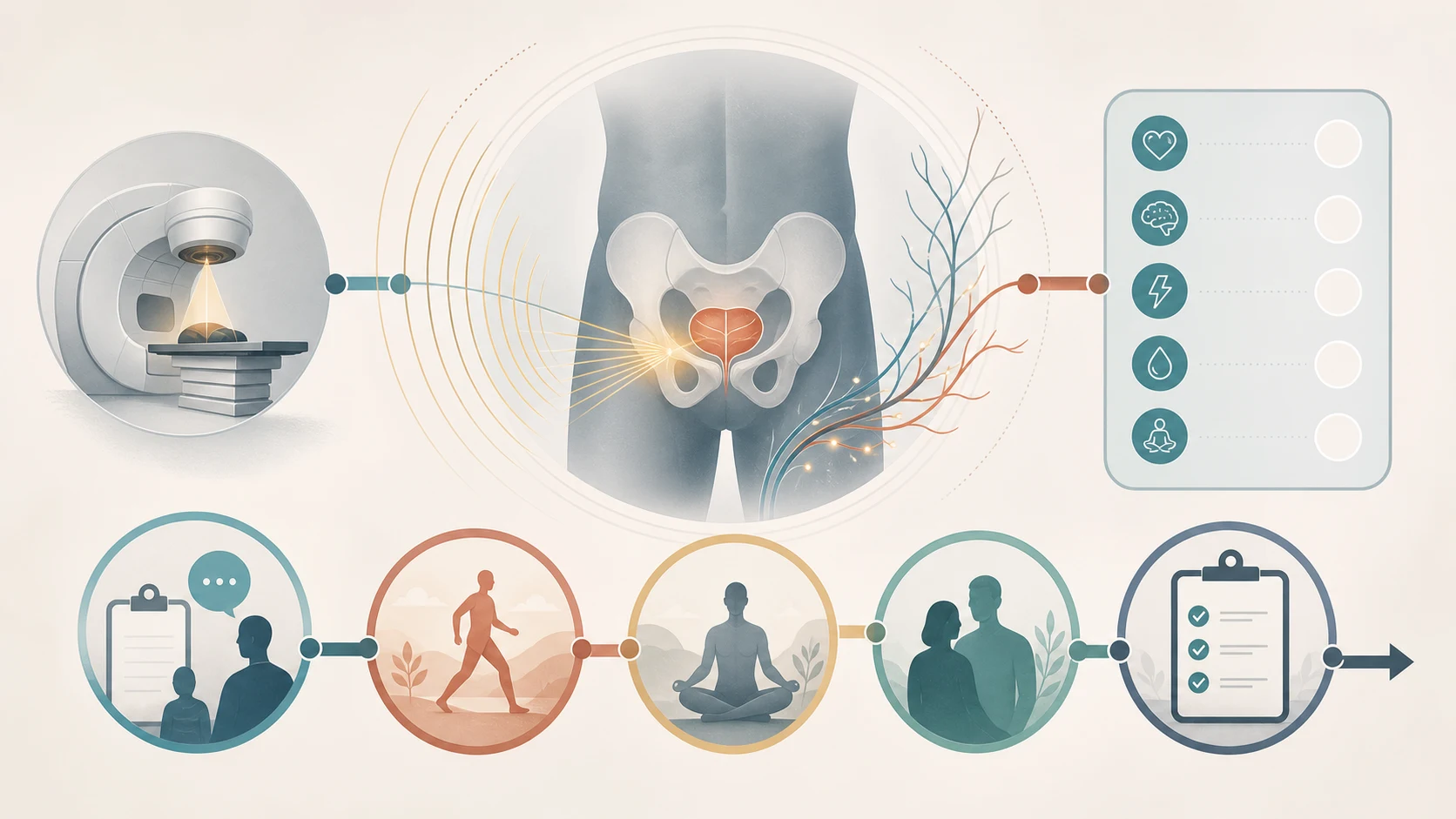
Why This Review Matters Now
The selected source is a July 17, 2026 review in Physica Medica, indexed by Europe PMC and PubMed under PMID 42468493. It examined radiation-induced erectile dysfunction in prostate cancer, including pathophysiology, clinical radiobiology and predictive modeling.
The PubMed abstract reports that the authors searched major medical databases through November 10, 2025 and included 39 peer-reviewed studies in the primary synthesis. That matters because the article is not a single case or a marketing claim. It is a synthesis of a difficult clinical question across multiple studies.
For JABKASAI's male-health audience, the review is useful because it turns a private worry into a better appointment conversation. Men can ask about baseline erectile function, hormone therapy, vascular risk, urinary symptoms and follow-up instead of waiting until embarrassment becomes silence.
- The topic is adult male prostate cancer care.
- The watch-report selection was overridden because the top source had already been drafted and approved on July 23.
- This draft is a create recommendation, not an update, because it focuses narrowly on radiotherapy-related erectile risk.
Erectile Function Is a System, Not a Switch
The JABKASAI Erectile Dysfunction: Medical Map already frames ED as a symptom pattern with vascular, nerve, hormone, medication and stress dimensions. Prostate radiotherapy belongs inside that larger map rather than outside it.
The 2026 review describes radiation-induced erectile dysfunction as multifactorial. Its abstract highlights interacting neurovascular, smooth-muscle and endocrine mechanisms. In plain language, erection quality can change because blood flow, nerve signaling, tissue response, hormones and general health all interact.
This is why two men can receive similar prostate cancer treatment and have different sexual outcomes. One may have strong baseline erections, no diabetes and no hormone therapy. Another may already have vascular disease, lower testosterone, medication interactions or anxiety around intimacy. The same treatment label does not create the same risk profile.
That complexity should make counseling more careful, not more frightening. A man does not need to master radiobiology before treatment. He does need enough language to ask what his team knows, what remains uncertain and how function will be monitored.
What Radiation Can Affect
NCI explains that external-beam radiation therapy to the pelvis and brachytherapy can affect male sexual function when blood vessels or nerves are damaged. It also notes that hormone therapy can lower testosterone and sexual drive, which can make erection concerns feel different from simple blood-flow problems.
The selected review adds a radiotherapy-specific layer. It identifies age, baseline erectile function, comorbidities, androgen deprivation therapy and radiation dose to erectile-relevant structures as key determinants of risk. Those factors are not all under a patient's control, but they are all worth naming.
A useful question is therefore not only, will radiotherapy cause ED? A better question is, based on my current erections, medical history, medications, cancer risk group, planned radiation field and any hormone therapy, what changes should I realistically watch for?
Men should also ask about timing. Some sexual side effects appear during treatment, while others evolve later. NCI's radiation side-effects guidance notes that some late effects may show up months or years after radiation therapy, depending on the treated area and other factors.
Prediction Is Improving, But It Is Not Perfect
One of the strongest findings from the 2026 review is humility. The authors reported that no externally validated radiation-induced erectile dysfunction-specific NTCP model was identified. NTCP models are tools that estimate normal-tissue complication probability, but a model is only clinically useful when it performs reliably outside the data used to build it.
The review also says machine-learning, deep-learning and radiogenomic approaches remain exploratory, with limits such as small or heterogeneous cohorts and insufficient external validation. For readers, that means a confident-looking number may still deserve questions about where it came from.
This does not mean radiation planning is careless. It means erection outcomes are hard to predict because patient factors, treatment technique, dose distribution, hormone therapy, measurement tools and follow-up timing vary across studies.
A practical way to use this uncertainty is to ask for ranges and monitoring rather than a guarantee. Men can ask what outcomes the clinic tracks, how sexual function is measured, when follow-up occurs and what options exist if erections decline.
- Ask whether risk estimates are based on patients like you.
- Ask which structures the planning team considers when discussing sexual side effects.
- Ask what the follow-up plan is if function changes after treatment.
The Questions to Ask Before Treatment
Before prostate radiotherapy, write down your baseline. Can you usually get an erection firm enough for sex? Do you use ED medication? Are morning erections present? Is libido stable? Do you have diabetes, heart disease, high blood pressure, smoking history, pelvic pain or urinary symptoms?
Bring medication details, including heart medicines, antidepressants, testosterone products, supplements and any hormone therapy planned for prostate cancer. ED medications are medical prescriptions, and they may be unsafe with some cardiovascular drugs or health conditions.
Good questions include: how might this treatment affect erections and orgasm; will hormone therapy be used; what urinary symptoms are common; which symptoms need a call; when should I see a urologist; and should pelvic floor physical therapy be considered before or after treatment?
It may also help to review the broader JABKASAI Prostate Health guide before the appointment, because prostate cancer conversations often overlap with urinary flow, pelvic discomfort, screening history and anxiety about recurrence.
Urinary Symptoms Belong in the Same Conversation
Erection concerns after prostate radiotherapy rarely arrive alone. Urinary urgency, frequency, burning, leakage or difficulty emptying can change how safe and confident a man feels sexually, which is why the Urinary Red Flags in Men guide is a relevant companion to this article.
NCI lists urinary and bladder problems among possible pelvic radiation side effects. Its urinary guidance says pelvic radiation can irritate the bladder and urinary tract, and it lists symptoms such as burning with urination, blood in urine, trouble starting, incomplete emptying, urgency, frequency, leakage with coughing or sneezing, bladder spasms and pelvic discomfort.
These symptoms do not automatically mean recurrence or permanent injury. They do mean that a man should know which changes are expected during his treatment course, which can wait for routine follow-up and which require prompt medical contact.
A simple symptom log can reduce guesswork: date, urinary frequency, nighttime urination, leakage pattern, pain, blood, fever, sexual function, medication use and any activity that worsens symptoms. Bring the log to oncology or urology rather than trying to interpret it alone.
Where Pelvic Floor Care Fits
The Male Pelvic Floor supports continence, sexual function, bowel coordination and pelvic stability. After prostate cancer treatment, some men benefit from pelvic floor rehabilitation, but the right approach depends on assessment.
Some men need strengthening. Others need relaxation, coordination, breathing work, scar-sensitive rehabilitation or strategies for urgency and leakage. More effort is not automatically better, especially when the pelvis is guarded, painful or inflamed.
A pelvic floor physical therapist can work with oncology and urology context. That is different from generic wellness advice. The professional question is not whether the pelvis is strong or weak in the abstract; it is what pattern is present in this specific man after this specific treatment.
Jab Kasai and traditional bodywork must stay inside a supportive, non-medical role. For medically stable adults who consent clearly, respectful bodywork may support relaxation, body awareness and comfort with the body. It cannot diagnose radiation injury, reverse nerve damage, treat cancer, prescribe ED medication or replace clinical follow-up.
Red Flags That Should Not Wait
Certain symptoms should be routed to medical care rather than a bodywork session or online reassurance. Fever, chills, severe pelvic pain, inability to urinate, new or heavy blood in urine, painful urinary retention, new leg weakness, chest pain, sudden shortness of breath or severe back or hip pain should be assessed promptly.
Sexual symptoms also need boundaries. Sudden severe penile pain, a prolonged erection, traumatic injury, new major curvature with pain, marked genital numbness or ED paired with exertional chest symptoms should not be handled as a massage issue.
A bodywork appointment should be postponed when infection, acute urinary symptoms, uncontrolled pain, unclear cancer-treatment complications or medically unexplained bleeding are present. Consent includes the right to pause, redirect or stop any technique, especially when the subject is intimate health.
The safest editorial message is direct: supportive touch can be part of recovery only when the medical situation is stable and the client is not using it as a substitute for oncology, urology or pelvic floor care.
How to Use the Evidence Without Panic
The 2026 review is useful because it resists oversimplification. It does not support a promise that modern radiotherapy prevents erectile dysfunction. It also does not support fatalism. It says the risk is multifactorial and that stronger standardized evidence is still needed.
For a man facing prostate radiotherapy, that creates a practical middle path. Ask early, document baseline function, understand hormone therapy, discuss vascular and metabolic health, clarify urinary warning signs and request referral when sexual or urinary symptoms affect daily life.
Partners can be included when the man wants that support. Erections are not only a mechanical event; they can affect confidence, avoidance, body image and closeness. A calmer shared vocabulary can make recovery less isolating.
For men seeking wellness care in Thailand or elsewhere, the same rule applies: evidence leads, claims stay modest, and the clinical team remains central. Any practitioner who promises to cure prostate cancer, undo radiotherapy injury or guarantee erections is crossing a medical safety line.
This article is educational only. New, severe, persistent or worsening urinary, sexual, pelvic or cancer-related symptoms should be assessed by qualified oncology, radiation oncology, urology or pelvic floor clinicians. Jab Kasai and bodywork do not replace diagnosis, prescribed treatment or cancer follow-up.
Conclusion
Prostate radiotherapy is not just a cancer-control decision; it is also a quality-of-life conversation. The strongest use of the 2026 review is to make that conversation earlier, more specific and less embarrassing.
Men do not need a perfect prediction model to ask better questions. They need an honest baseline, a clear follow-up plan, medical routing for red flags and a firm boundary between supportive bodywork and clinical care.
Frequently asked questions
Does prostate radiotherapy always cause erectile dysfunction?
No. Risk varies by baseline erectile function, age, vascular health, diabetes, medications, cancer treatment plan, hormone therapy and radiation details. Some men maintain useful erections, some notice gradual decline, and some need medical support.
The best step is to discuss your personal baseline and risk factors before treatment rather than relying on a single general percentage.
Can a radiation plan predict my exact erection outcome?
Not exactly. The 2026 systematic review found that radiation-induced erectile dysfunction prediction remains uncertain and that no externally validated RIED-specific NTCP model was identified.
Your team may still discuss risk, dose planning and follow-up, but it should be presented as informed guidance, not a guarantee.
Should urinary symptoms be discussed during an erection-health visit?
Yes. Urgency, frequency, burning, leakage, blood in urine or trouble emptying can affect confidence, sleep, intimacy and safety. Pelvic radiation can irritate the bladder and urinary tract, so urinary symptoms deserve their own clinical questions.
Ask which symptoms are expected, which need urgent contact and whether urology or pelvic floor referral is appropriate.
Can Jab Kasai treat radiation-induced erectile dysfunction?
No. Jab Kasai or massage should not be presented as treatment for prostate cancer, radiation injury, nerve damage, vascular erectile dysfunction or urinary complications.
For medically stable adults, respectful bodywork may support relaxation and body awareness, but oncology, urology and pelvic floor clinicians should guide diagnosis and treatment decisions.
Related JABKASAI guides
Topics
Sources reviewed
- Radiation-induced erectile dysfunction in prostate cancer — Europe PMC / Physica Medica
- Radiation-induced erectile dysfunction in prostate cancer - PubMed — PubMed / National Library of Medicine
- Sexual Health Issues in Men with Cancer — National Cancer Institute
- Radiation Therapy Side Effects — National Cancer Institute
- Urinary and Bladder Problems — National Cancer Institute
- Prostate Cancer Treatment (PDQ) - Patient Version — National Cancer Institute
- Clinically Localized Prostate Cancer: AUA/ASTRO Guideline, Part II — PubMed / National Library of Medicine