医学 schema
How to read this guide safely
This visual map connects 男性 G-Spot, 前列腺 Pleasure and 安全 to anatomy, symptom triage, professional care and the limits of bodywork claims.
- 01
Observe the pattern
Location, timing, intensity, triggers and associated 泌尿, 性, 疼痛 or systemic changes.
- 02
Check 危险信号
Sudden, severe, feverish, bleeding, retention or rapidly worsening 症状 move first.
- 03
Choose the care path
Primary care, urgent care, urology, 骨盆底 physiotherapy or 性-健康 review depending on the pattern.
- 04
Keep clear boundaries
No massage, pressure or traditional interpretation should bypass red-flag triage.
一些性健康内容将前列腺描述为快感敏感区域,有时称为 P 点或男性 G 点。
此页面的用途
成人的愉悦语言应与医疗声明分开。刺激偏好、同意和解剖结构与治疗前列腺炎、ED、BPH 或前列腺癌不同。目标是帮助成年读者从私人的、模糊的担忧转变为可以与合格的专业人士讨论的结构化描述。语气是平静的、医学的、非色情的:症状并不可耻,也不应该变成奇观。
本页面是根据重点主题研究构建的原创教育指南,然后通过医学来源审查和 JABKASAI 安全边界进行丰富。它不会通过屏幕进行诊断、开出治疗处方或承诺车身效果。它解释了要观察什么、哪些迹象可能是紧急的、以及在医疗安全之后必须保持放松、传统语言或 Jab Kasai 词汇的地方。
How to read the symptom
从时间线开始。这种变化是突然出现的、感染后、手术后、服用新药后、压力后、疼痛后、受伤后还是几个月后逐渐出现的?然后描述位置、强度、频率和趋势。改善、稳定或恶化的症状会导致不同的决定。发烧、出血、肿胀、神经系统变化或无法排尿等症状并不是一个简单的健康问题。
对于男性 G 点、前列腺快感和安全而言,背景很重要,因为男性私密健康是一个共享系统。血流、神经、激素、前列腺、膀胱、睾丸、盆底、排便习惯、睡眠、情绪和关系压力可以重叠。将这些层次放在一起阅读比过早选择一种解释更准确。
需要注意的常见模式
有用的观察是具体的。在寻找补救措施或比较从业者之前,请注意以下模式之一是否适合:
- 对前列腺刺激的好奇心。
- 快乐和治疗主张之间的混淆。
- 担心安全或卫生。
- 症状被重新定义为色情探索。
- 任何练习之前都需要界限。
这些注释不能证明诊断。他们让下一个决定更加清晰。它们还可以防止营销将每一种男性症状简化为精力不足、年龄增长、男子气概减弱、羞耻或某个器官。精确的注释可以显示该模式是性的、泌尿的、睾丸的、骨盆的、荷尔蒙的、传染的、术后的、心理的还是混合的。
未自诊断的可能原因
这个话题可能涉及几个可能的原因,包括性好奇、前列腺解剖、网上神话、车身营销、关系沟通、医疗症状困惑。此列表不是自我治疗菜单。提醒您的是,根据年龄、病史、药物、暴露情况、疼痛类型和检查结果的不同,同一主诉可能有不同的含义。
最安全的方法分为三类。首先是需要快速护理的紧急症状。其次是持续或反复出现的症状,值得专业评估,无需恐慌。第三是非紧急的健康因素,例如睡眠、压力、水分、性交流、静坐时间和温和的运动。当这些类别混合时就会出现问题:当护理紧急时,一个人可能会尝试放松,或者对需要观察和冷静预约的温和模式感到恐慌。
Red flags and urgency
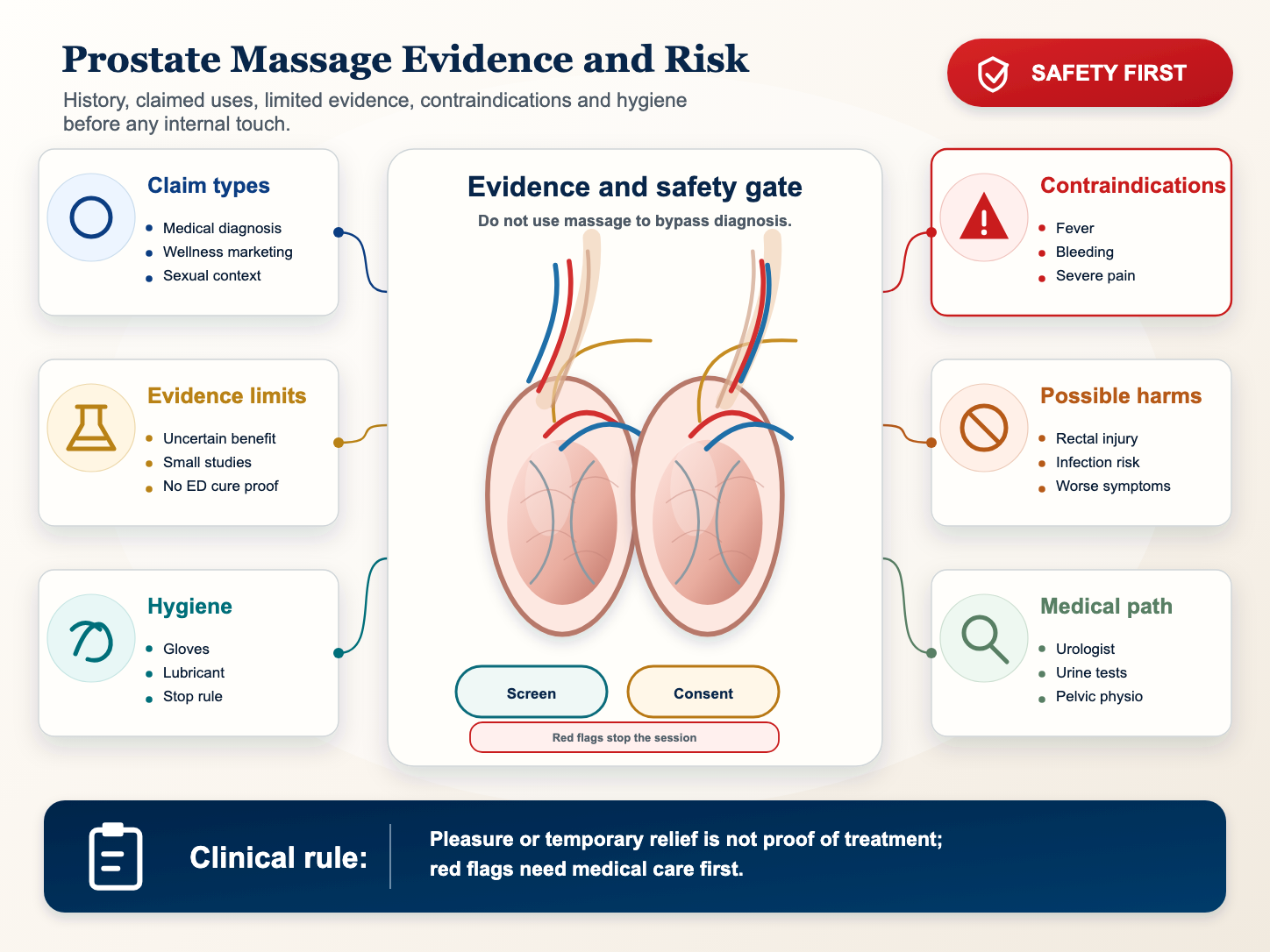
不要在疼痛、出血、感染迹象、发烧、排尿困难、最近手术、严重痔疮、外伤或不清楚同意的情况下进行前列腺刺激。
紧迫性并不意味着勇敢或尴尬。这是关于时间敏感的风险。睾丸突然剧烈疼痛、无法排尿、伴有泌尿系统或盆腔症状的发烧、新出现的肿胀、外伤、出血、分泌物、剧烈疼痛、性交过程中的胸部症状或神经系统体征可以立即改变决定。在这种情况下,等待按摩、补充剂、热敷、伸展运动或呼吸是否有帮助可能是不安全的。
如果您不确定症状是否紧急,联系医疗服务机构比检查身体更安全。该网站无法实时对个人进行分类。
需要注意的问题
许多男性发现很难在短暂的约会中解释亲密症状。书面问题使对话更简单、更完整。对于本主题,有用的问题包括:
- 这是双方同意的快乐还是一种症状?
- 卫生、防护和停止信号是否清晰?
- 是否存在医疗危险信号?
- 有人承诺治疗结果吗?
如果可能的话,带上一页的时间表。包括第一次约会、当时发生的变化、药物和补充剂、性接触、手术、受伤、发烧、泌尿系统症状、肠道症状、疼痛部位、勃起或射精变化以及您已经尝试过的内容。临床医生可以更好地使用它,而不是使用诸如“有些问题”之类的模糊句子。
医疗评估和现实护理
根据模式,评估可能包括病史、体检、尿液检测、性传播感染检测、血液检测、激素检查、心血管风险检查、精液分析、超声波、前列腺评估、药物检查、疼痛评估或专家转诊。并非每个人都需要每项测试。重点是让模式指导下一步。
良好的照顾也尊重情感层。性、泌尿和骨盆症状会产生恐惧、回避、关系压力和反复检查。这种情绪反应是真实的,但它不应该消除医学检查。最好的途径可能包括:排除危险,治疗可识别的原因,然后当这些因素维持循环时,致力于压力、信心、疼痛教育、盆底协调或沟通。
Jab Kasai 和车身的契合点
专业框架必须定义同意、范围、卫生、悬垂、非胁迫和转介。快乐主张永远不应该成为医疗治愈主张。在 JABKASAI 上,传统车身工作被描述为文化或福祉背景,而不是诊断的替代品。承诺治愈感染、不孕不育、勃起功能障碍、前列腺疾病、尿路梗阻、激素缺乏或睾丸疾病的医生的主张超出了责任范围。
对于敏感的解剖学,最低要求是明确的:明确同意、卫生、铺巾、范围解释、停止权和可见的医疗转诊规则。车身工作不应该是痛苦的、秘密的、强制性的,也不应该作为堵塞被释放的证据。如果出现疼痛、肿胀、发烧、分泌物、新肿块、血液、创伤或严重不适,则不应继续治疗。
不应该假设什么
不要将前列腺变成神奇的性或医疗开关。这是解剖学,而不是神话。假设网上读到的故事、论坛答案或从业者的承诺适用于每个人也是有风险的。男性私密健康因年龄、血液循环、药物、压力、既往感染、手术、生育目标和关系背景而异。
另一个常见的错误是将休息、性行为、按摩或一段时间后的改善视为原始原因的证据。症状因多种原因而波动。改进是有用的信息,但它并不总是能确定机制。反之亦然:坚持并不意味着灾难,但它确实意味着问题需要一个更清晰的计划。
实际的下一步
保持主题成人化、基于同意且非医疗;首先将症状告知临床医生。如果症状轻微且不紧急,一到两周的简短记录会有所帮助。记录睡眠、压力、酒精、运动、静坐时间、消化、性活动、疼痛程度、尿液变化和药物。如果症状持续、进展、复发或造成痛苦,请从伐木转向护理。
使用通俗易懂的语言与专业人士交谈:“从这一天开始。这些因素是好是坏。这些危险信号要么不存在,要么存在。这就是我担心的地方。”这足以开始认真的评估。您无需带着诊断书前来。
Reader checklist
- 写下首次日期、主要部位、强度以及症状是否改善、稳定或恶化。
- 将泌尿、性、肠道、睾丸、骨盆、睡眠、药物和压力变化放在同一页上。
- 在考虑按摩、补充剂、伸展运动或性测试之前检查紧急症状。
- 询问客观的考试或测试是否能比猜测更好地回答问题。
- 保持专业界限清晰可见:同意、卫生、范围、停止信号和转介规则。
底线
男性 G 点、前列腺快感和安全应该精确处理,而不是恐慌或羞耻。最安全的顺序很简单:说出症状,描述模式,检查危险信号,在需要时寻求护理,并将健康习惯保持在适当的位置。这个顺序可以保护健康、尊严和决策。