
Medical schema
How to read this guide safely
This visual map connects Jab Kasai and Erection: Caution and Possible Medical Causes to anatomy, symptom triage, professional care and the limits of bodywork claims.
- 01
Observe the pattern
Track side, onset, swelling, lump, heaviness, fever, injury, fertility context and pain severity.
- 02
Check red flags
Fever, chills, burning urination, retention, vomiting or feeling seriously unwell moves first.
- 03
Choose the care path
Urine testing, culture, antibiotics, imaging or urgent care may be needed depending on severity.
- 04
Keep clear boundaries
Sensitive bodywork requires explicit consent, hygiene and a stop rule after medical red flags are excluded.
Erection changes are common and emotionally loaded, which makes them vulnerable to miracle claims. Jab Kasai should not be promoted as a cure for erectile dysfunction.
Online information about Jab Kasai is dominated by practitioner sites, wellness schools and promotional descriptions. That does not make the subject unimportant, but it does mean this page uses a conservative editorial frame: tradition, adult wellbeing, culture, consent and safety first; medical treatment claims only when supported by appropriate evidence.
What this subject means
Erection changes are common and emotionally loaded, which makes them vulnerable to miracle claims. Jab Kasai should not be promoted as a cure for erectile dysfunction. The definition should stay close to what can be observed: a named practice, a cultural or wellness context, a practitioner-client interaction, and a sensitive anatomical region that requires boundaries.
A useful page does not pretend that every school uses the same vocabulary or technique. It gives readers enough language to ask better questions before they book a session, join a course or compare online claims. The goal is not to teach technique. The goal is to make the topic safer, clearer and less vulnerable to exaggerated marketing.
Thai traditional context
Traditional bodywork may help some adults feel calmer, less guarded or more aware of pelvic tension. That subjective benefit should be separated from treating erectile dysfunction.
That distinction matters because traditional language can be valuable without being identical to modern medical language. Words such as energy, flow, heat, release, vitality or blocked pathways may describe a practitioner model or a client experience. They should not be rewritten as proof that blood vessels, hormones, sperm production, infection or nerve function have been medically changed.
What can be said responsibly
The responsible version is modest. Jab Kasai may be discussed as an adult Thai-associated bodywork topic, a wellbeing tradition, a cultural practice or a relaxation/body-awareness conversation when the client is appropriate, consent is explicit and contraindications have been screened.
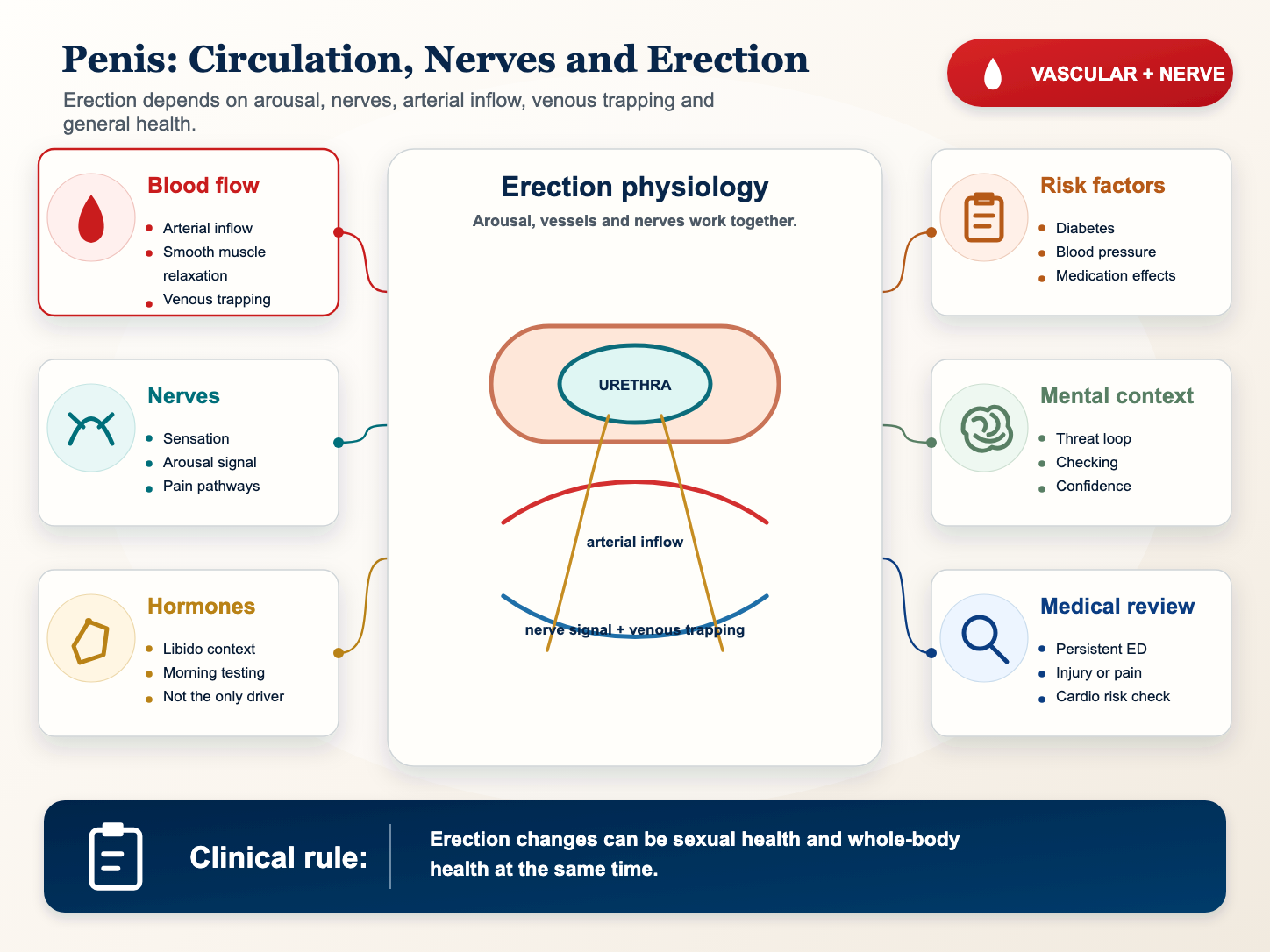
Erectile dysfunction can involve vascular disease, diabetes, blood pressure, nerves, hormones, medications, alcohol, sleep, anxiety, depression and relationship context. Persistent symptoms deserve assessment. The more a claim sounds like diagnosis, treatment or measurable health change, the more carefully it must be supported. In a sensitive area of the body, caution is not weak writing; it is the editorial standard that keeps the reader protected.
What should not be promised
The unsafe claim is that a session can restore erections without screening medical causes. Relaxation and body confidence are not the same as vascular or endocrine treatment.
No manual practice should be sold as a substitute for a doctor, urologist, reproductive specialist, sexologist or pelvic floor physiotherapist. A reader may choose safe bodywork for relaxation or cultural interest, but symptoms and medical goals deserve a different threshold of proof.
- Do not promise a cure for erectile dysfunction, infertility, prostatitis, low testosterone or chronic pelvic pain.
- Do not use pain, soreness, heat or emotional release as proof that a medical problem has been corrected.
- Do not discourage medical assessment when symptoms are new, persistent, severe, sudden or worrying.
Seek care promptly for sudden erection problems after injury, ED with chest pain, severe genital pain, diabetes or cardiovascular risk, or persistent ED over time.
Medical safety frame
Medical safety starts before the session. A practitioner cannot safely evaluate serious testicular, urinary, fertility, hormone or erection concerns by touch alone. The client should be encouraged to describe symptoms plainly, and the practitioner should be ready to pause or refuse bodywork when the story suggests possible disease, infection, injury or emergency.
The most important divide is between curiosity and symptoms. Curiosity about a tradition may stay in the education and wellbeing category. Sudden pain, swelling, fever, trauma, a new lump, urinary changes, discharge, persistent erection difficulty, fertility delay or hormone concerns move the question toward qualified medical care. Those categories should not be blurred.
This conservative sequence also protects the cultural discussion itself. When a traditional practice is forced to carry medical promises it cannot prove, readers lose the ability to appreciate the tradition honestly. Clear limits make the subject more credible, not less. They allow a page to say what may be personally meaningful, what may be relaxing, what belongs to practitioner language, and what must remain in the hands of qualified healthcare professionals.
Consent, hygiene and boundaries
Consent must be specific, informed and reversible. The client should know what areas are included, what areas are excluded, whether the session is external only, what draping is used, how pressure is controlled and how to stop. The right to stop should not require explanation, negotiation or politeness.
Hygiene is also part of the boundary. Clean linens, hand hygiene, privacy, appropriate use of gloves when relevant, no contact with broken or infected skin, and no contaminated oil containers are practical requirements. A beautiful room does not compensate for vague consent or unsafe claims.
How to read online claims
Many online pages mix cultural tradition, personal testimonials, sexual confidence, fertility language and medical-sounding vocabulary in the same paragraph. Readers should separate each layer. Is the claim about feeling relaxed? Is it about a traditional explanation? Is it promising a measurable outcome? Has the outcome been tested, or is it simply asserted?
The safest habit is to translate promotional language into plain questions. What exactly is being promised? How would anyone know it worked? What symptoms would stop the session? What does the practitioner refuse to treat? Where does medical care begin? If those questions feel unwelcome, the marketing is already giving useful information.
Questions to ask before a session
Use bodywork, if chosen, as a wellbeing support only after red flags and ongoing symptoms have been considered. A clinician can discuss evidence-based options without shame.
- What training and supervision support this practice?
- Which symptoms or medical histories mean you will not proceed?
- How are consent, draping, hygiene, privacy and the stop rule explained?
- Do you make any claims about fertility, testosterone, erections, prostatitis or pain?
Short answers for readers
Is Jab Kasai a medical treatment? On this site, no. It is presented as a Thai-associated tradition and wellbeing topic with limited medical evidence, not as a standardized treatment.
Can it be relaxing? Some adults may experience safe bodywork as relaxing or grounding. That subjective experience should not be confused with curing a condition.
Should symptoms be checked first? Yes. Symptoms that are sudden, severe, persistent, unexplained or linked with testicular, urinary, fertility, hormone or erection concerns deserve qualified assessment.
What is the professional standard? Clear scope, non-erotic framing, consent, hygiene, privacy, modest claims and referral when the concern is medical.
Bottom line
Jab Kasai can be written about respectfully when it is kept in the correct frame: Thai tradition, adult education, body awareness and wellbeing. The moment a page claims to treat disease, raise hormones, restore fertility, cure erectile dysfunction or override medical warning signs, it has crossed into a different standard of proof.
Use this page to ask better questions and protect boundaries. If the issue is cultural curiosity, choose a practitioner who is transparent and professional. If the issue is pain, swelling, a lump, urinary symptoms, fertility, testosterone, erection change or fear that something is wrong, start with qualified medical care.