Educational content by JabKasai Longevity. Editorial policy
Content updated:
The groin carries the spermatic cord, the femoral vessels, nerves and lymph nodes, and is where hernias appear. The source works along the inguinal ligament and the inner thigh; the femoral triangle just below needs particular care.
This page summarises how published sources describe a technique, with the anatomy and safety rules a practitioner needs. It does not replace supervised, in-person training, and it is not evidence that the technique treats any condition. In Thailand, Ministry of Public Health officials have said kasai massage is a treatment that belongs in licensed Thai traditional medicine settings, not general massage shops.
The techniques
1. Inguinal ligament release
What the source describes.
Fingertip massage along the length of the inguinal ligament, from the hip bone towards the pubic bone, described in the source as releasing the ligament and draining lymph.
Anatomy under the hands.
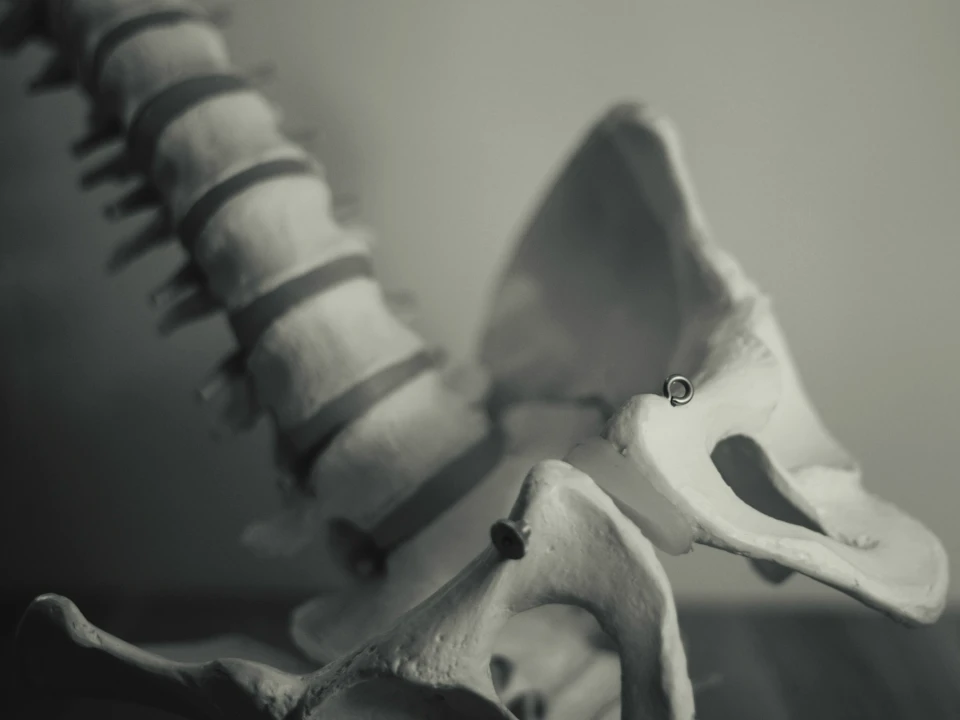
The inguinal ligament runs from the front point of the hip bone to the pubic tubercle. Above its inner half is the inguinal canal, where the spermatic cord passes and inguinal hernias form. Below it are the femoral artery, vein and nerve and the inguinal lymph nodes.
Position.
Client on the back; practitioner facing the leg being worked, one hand around the outer thigh.
How it is performed.
- Locate the front point of the hip bone.
- Work towards the pubic bone along the line of the ligament with the pads of the fingers, using short strokes or small circles.
- Repeat a few times, then change sides.
Pressure and pace.
Light to moderate, gliding rather than sinking. The aim is soft tissue, not the structures beneath the ligament.
Do not / stop if.
- a bulge that appears on coughing or straining: possible hernia, stop and refer;
- swollen or tender lymph nodes, which need a medical explanation;
- sharp pain, tingling into the scrotum or thigh.
2. Inner thigh release
What the source describes.
With the leg turned outwards, the thumb presses under the inner thigh muscles and makes a long stroke down towards the knee, repeated until the muscles soften. The other hand keeps the genitals covered and out of the way.
Anatomy under the hands.
The adductor muscles and gracilis on the inner thigh. The great saphenous vein runs along the inner thigh under the skin.
Position.
Client on the back, leg rotated outwards and supported, or legs over the practitioner's knees as in the source.
How it is performed.
- Start a hand's width below the groin crease, not in it.
- Stroke slowly down the inner thigh towards the knee with the thumb or the heel of the hand.
- Repeat three to five times, then compare with the other side.
Pressure and pace.
Moderate. Always stroke away from the groin, towards the knee.
Do not / stop if.
- a swollen, warm or painful calf or thigh (possible blood clot): do not massage the leg at all;
- visible varicose veins: no deep pressure on them;
- hip pain when the leg is turned out.
The femoral triangle
The femoral triangle is the area just below the inguinal ligament on the front of the thigh. It contains the femoral artery, vein and nerve close to the surface. A strong pulse here is normal. Sustained pressure on it is not: it compresses the vessels and nerve and can cause numbness or a cold leg. Glide across this area; do not hold pressure in it.
About lymphatic drainage claims
Manual lymphatic drainage is a real technique used by trained therapists for lymphoedema, with very light, specific strokes. Firm groin pressure is a different thing and has not been shown to "detoxify". Swollen lymph nodes always need a medical explanation rather than massage.