
ทางการแพทย์ schema
How to read this guide safely
This visual map connects Prostatitis อาการ, สาเหตุ and การรักษา to anatomy, symptom triage, professional care and the limits of bodywork claims.
- 01
Observe the pattern
Sort flow, urgency, night urination, อุ้งเชิงกราน อาการปวด, ejaculation อาการปวด, PSA questions and screening anxiety.
- 02
Check สัญญาณอันตราย
Fever, chills, burning urination, retention, vomiting or feeling seriously unwell moves first.
- 03
Choose the care path
Urine testing, culture, antibiotics, imaging or urgent care may be needed depending on severity.
- 04
Keep clear boundaries
ต่อมลูกหมาก massage or supplements should never replace screening, infection care or obstruction assessment.
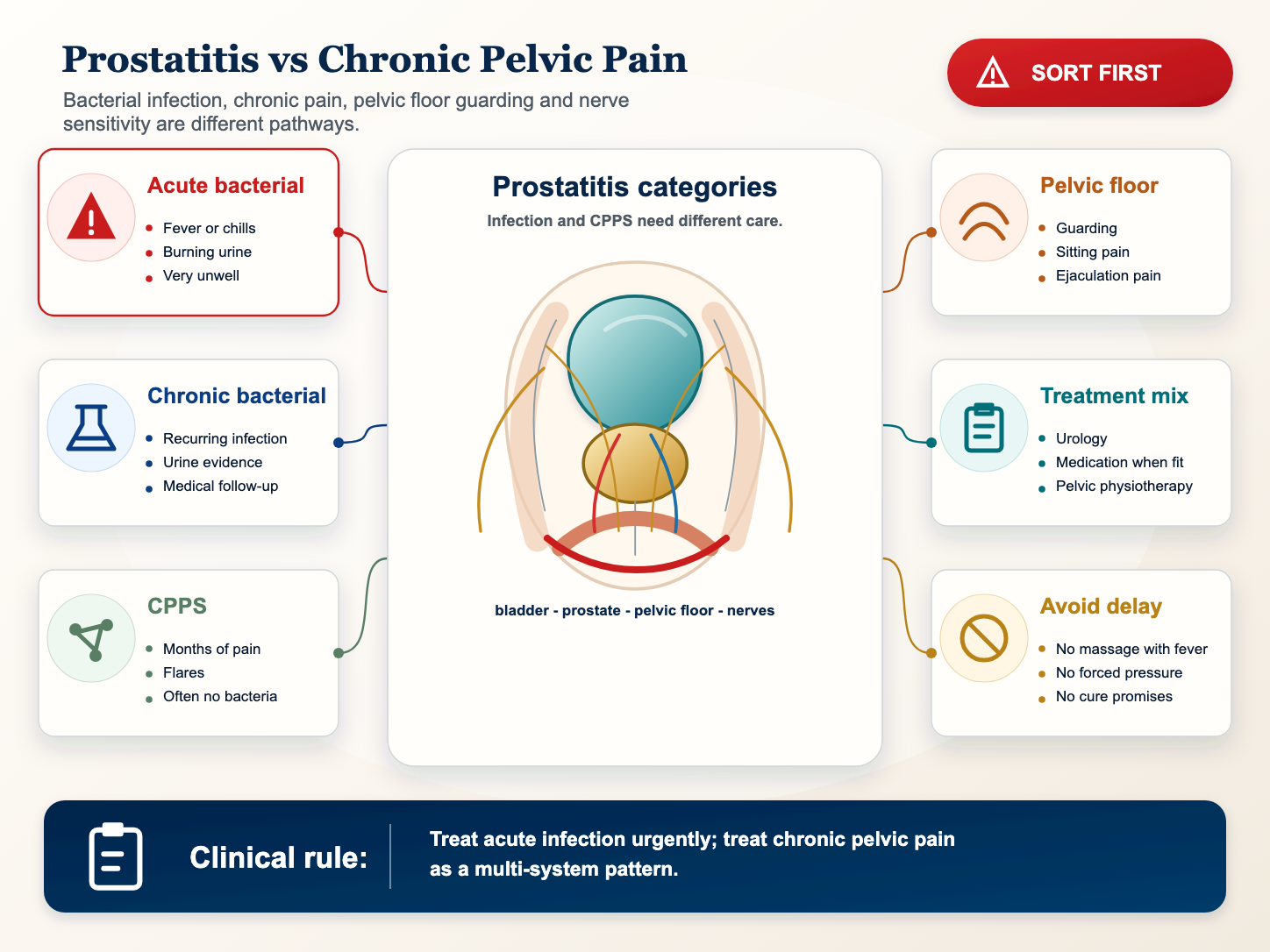
ต่อมลูกหมากอักเสบไม่ใช่โรคง่ายๆ อาจหมายถึงการติดเชื้อแบคทีเรียเฉียบพลัน การติดเชื้อแบคทีเรียเรื้อรัง อาการอักเสบที่ไม่มีอาการ หรือต่อมลูกหมากอักเสบเรื้อรัง/อาการปวดกระดูกเชิงกรานเรื้อรัง หมวดหมู่เหล่านี้มีความสำคัญเนื่องจากมีไข้และการติดเชื้อเรียกร้องให้มีการตอบสนองที่แตกต่างจากความเจ็บปวดในระยะยาว การป้องกันอุ้งเชิงกราน ความไวของเส้นประสาท หรืออาการลุกลามที่เกี่ยวข้องกับความเครียด
เหตุใดคู่มือนี้จึงมีความสำคัญ
อาการต่อมลูกหมากอักเสบ สาเหตุ และการรักษาอยู่ในแผนที่สุขภาพของผู้ชายที่ใหญ่ขึ้น อาการหรือคำถามมักไม่ค่อยมาจากโครงสร้างที่แยกจากกันเพียงโครงสร้างเดียว การไหลเวียนของเลือด เส้นประสาท ฮอร์โมน กล้ามเนื้อ การนอนหลับ ความเครียด การใช้ยา พฤติกรรมการปัสสาวะ พฤติกรรมการขับถ่าย และบริบทของความสัมพันธ์ ล้วนสามารถเปลี่ยนแปลงความรู้สึกของร่างกายได้ วัตถุประสงค์ของหน้านี้คือการให้แนวทางอย่างรอบคอบก่อนที่ผู้อ่านจะเปรียบเทียบการรักษา ประเพณีกายบำบัด หรือการกล่าวอ้างทางออนไลน์
ต่อมลูกหมากอักเสบไม่ใช่โรคง่ายๆ อาจหมายถึงการติดเชื้อแบคทีเรียเฉียบพลัน การติดเชื้อแบคทีเรียเรื้อรัง อาการอักเสบที่ไม่มีอาการ หรือต่อมลูกหมากอักเสบเรื้อรัง/อาการปวดกระดูกเชิงกรานเรื้อรัง หมวดหมู่เหล่านี้มีความสำคัญเนื่องจากมีไข้และการติดเชื้อเรียกร้องให้มีการตอบสนองที่แตกต่างจากความเจ็บปวดในระยะยาว การป้องกันอุ้งเชิงกราน ความไวของเส้นประสาท หรืออาการลุกลามที่เกี่ยวข้องกับความเครียด เป้าหมายเชิงปฏิบัติไม่ใช่การวินิจฉัยจากหน้าจอ เป็นการปรับปรุงคุณภาพของการตัดสินใจครั้งต่อไป: สิ่งที่ต้องสังเกต สิ่งที่ควรบันทึก สิ่งที่ปลอดภัยที่จะลองใช้เป็นการสนับสนุนด้านสุขภาพโดยทั่วไป และสิ่งที่ควรส่งต่อไปยังแพทย์ที่มีคุณสมบัติเหมาะสมโดยตรง
กายวิภาคศาสตร์และฟังก์ชันที่เรียบง่าย
ต่อมลูกหมากเป็นต่อมเล็ก ๆ ใต้กระเพาะปัสสาวะและด้านหน้าไส้ตรง มันล้อมรอบท่อปัสสาวะส่วนบน ก่อให้เกิดของเหลวให้กับน้ำอสุจิ และอยู่ใกล้กับคอกระเพาะปัสสาวะ กล้ามเนื้ออุ้งเชิงกราน เส้นประสาท และลำไส้ ในภาษาธรรมดา ส่วนของร่างกายหรือระบบที่อธิบายในที่นี้มีงานปกติ มีช่วงของการเปลี่ยนแปลงปกติ และชุดของรูปแบบการเตือน การสร้างความสับสนทั้งสามประเภทนี้เป็นสาเหตุทั่วไปที่ผู้ชายเพิกเฉยต่ออาการที่สำคัญหรือรู้สึกหวาดกลัวกับการเปลี่ยนแปลงตามปกติ
ต่อมลูกหมากอาจอักเสบหรือติดเชื้อได้ แต่อาการปวดกระดูกเชิงกรานเรื้อรังอาจเกี่ยวข้องกับกล้ามเนื้อ เส้นประสาท พฤติกรรมของกระเพาะปัสสาวะ พฤติกรรมการขับถ่าย การรู้สึกเจ็บปวด ความเครียด และการติดเชื้อก่อนหน้านี้ การรักษาอาจรวมถึงยาปฏิชีวนะเมื่อมีแนวโน้มว่าจะติดเชื้อหรือได้รับการพิสูจน์แล้ว สารอัลฟาบล็อคเกอร์ในรูปแบบทางเดินปัสสาวะที่เลือก วิธีต้านการอักเสบหรือความเจ็บปวด กายภาพบำบัดอุ้งเชิงกราน การทำงานแบบไลฟ์สไตล์ และการดูแลแบบสหสาขาวิชาชีพ ด้วยเหตุนี้ JABKASAI จึงใช้กรอบอนุรักษ์นิยม ภาษาดั้งเดิมอาจมีความหมาย แต่ไม่ควรแทนที่กายวิภาคศาสตร์ สรีรวิทยา หรือการทดลองทางคลินิก เมื่อการเรียกร้องเป็นเรื่องทางการแพทย์ หลักฐานและแนวทางการประเมินจะต้องเป็นเรื่องทางการแพทย์ด้วย
รูปแบบทั่วไปที่ควรสังเกต
การสังเกตที่เป็นประโยชน์มีความเฉพาะเจาะจง ผู้อ่านควรสังเกตสถานที่ ช่วงเวลา ความเข้มข้น สิ่งกระตุ้น ระยะเวลา และการเปลี่ยนแปลงที่เกี่ยวข้อง แทนที่จะใช้ป้ายกำกับที่คลุมเครือเพียงป้ายเดียว สำหรับหัวข้อนี้ รูปแบบที่มีประโยชน์ที่สุดได้แก่:
- ปวดหรือกดทับบริเวณฝีเย็บ เชิงกราน องคชาต อัณฑะ ทวารหนัก หรือช่องท้องส่วนล่าง
- ปัสสาวะแสบขัด ความเร่งด่วน ความถี่ ปัสสาวะไหลน้อย หรือปัสสาวะกลางคืน
- ปวดระหว่างหรือหลังการหลั่ง บางครั้งอาจยาวนานหลายนาทีหรือหลายชั่วโมง
- มีไข้ หนาวสั่น เจ็บป่วยเฉียบพลัน หรืออาการทางเดินปัสสาวะแย่ลงอย่างรวดเร็ว
- อาการกำเริบในระยะยาวที่เกิดจากการนั่ง ความเครียด ท้องผูก ปั่นจักรยาน เซ็กส์ หรือการออกกำลังกาย
รูปแบบเหล่านี้ไม่ใช่การวินิจฉัยที่บ้าน สิ่งเหล่านี้เป็นวิธีที่ปลอดภัยกว่าในการพูดคุยกับแพทย์ ผู้เชี่ยวชาญด้านระบบทางเดินปัสสาวะ นักกายภาพบำบัดบริเวณอุ้งเชิงกราน นักบำบัดทางเพศ หรือผู้เชี่ยวชาญที่มีคุณสมบัติเหมาะสมอื่นๆ บันทึกที่แม่นยำยังทำให้ผู้ปฏิบัติงานหรือเพจการตลาดลดความกังวลทุกอย่างเกี่ยวกับความตึงเครียด พลังงานที่ปิดกั้น อายุ หรือความวิตกกังวลได้ยากขึ้น
การคัดแยกทางการแพทย์ก่อนการตีความ
คำถามคัดแยกโรคแรกคือว่าเป็นไปได้หรือไม่ที่จะเกิดการติดเชื้อหรือการอุดตันของทางเดินปัสสาวะอย่างเร่งด่วน จากนั้นจึงควรสำรวจอาการปวดอุ้งเชิงกรานเรื้อรังและรูปแบบพื้นอุ้งเชิงกราน หน้าการศึกษาที่จริงจังจะต้องรักษาลำดับนี้ให้ชัดเจน ก่อนอื่นให้ถามว่าสถานการณ์นั้นเร่งด่วน ใหม่ รุนแรง ต่อเนื่อง หรือเกี่ยวข้องกับอาการทางระบบ หลังจากนั้นผู้อ่านควรคิดถึงวิถีชีวิต ความเครียด การออกกำลังกาย ความมั่นใจทางเพศ หรือภาษาเกี่ยวกับความเป็นอยู่ที่ดีแบบดั้งเดิม
การประเมินทางคลินิกอาจเกี่ยวข้องกับการซักประวัติ การตรวจร่างกาย การตรวจปัสสาวะ การตรวจเลือด คะแนนอาการ การถ่ายภาพ การวิเคราะห์น้ำอสุจิ การตรวจสอบความเสี่ยงต่อโรคหัวใจและหลอดเลือด การพิจารณาใช้ยา หรือส่งต่อผู้ป่วย ทางเดินที่ถูกต้องขึ้นอยู่กับรูปแบบ หน้าเพจสอนแผนที่ได้แต่ตรวจร่างกายไม่ได้
มีไข้ หนาวสั่น ปัสสาวะแสบร้อนรุนแรง ไม่สามารถปัสสาวะได้ มีเลือดในปัสสาวะ ปวดหลังอย่างรุนแรง อาเจียนหรือรู้สึกไม่สบายอย่างมาก จำเป็นต้องได้รับการประเมินทางการแพทย์โดยทันที
คำถามที่ควรค่าแก่การดูแล
ก่อนนัดหมายให้เขียนสรุปหนึ่งหน้า อาจรวมถึงอาการวันแรกที่ปรากฏ สิ่งที่เปลี่ยนแปลงในช่วงเวลานั้น สิ่งที่ทำให้รูปแบบแย่ลง สิ่งที่ทำให้ดีขึ้น การเปลี่ยนแปลงยา อาการทางเพศ อาการทางเดินปัสสาวะ อาการลำไส้ มีไข้ เลือด การบาดเจ็บ การนอนหลับ ความเครียด และการรักษาก่อนหน้านี้ คำถามที่ดีสำหรับหัวข้อนี้ได้แก่:
- ตรวจปัสสาวะแล้วพบแบคทีเรียหรือไม่?
- นี่เป็นการเจ็บป่วยเฉียบพลันหรือรูปแบบความเจ็บปวดที่เกิดซ้ำเรื้อรังหรือไม่?
- การหลั่ง การนั่ง การขับถ่าย หรือความเครียด ทำให้ความเจ็บปวดเปลี่ยนไปหรือไม่?
- การประเมินอุ้งเชิงกรานจะเหมาะสมหรือไม่หลังการติดเชื้อและพิจารณาธงสีแดงแล้ว
การเตรียมตัวแบบนี้มีประโยชน์อย่างยิ่งต่อสุขภาพของใกล้ชิด เพราะความลำบากใจอาจทำให้การนัดหมายรู้สึกเร่งรีบ บันทึกที่เป็นลายลักษณ์อักษรเปลี่ยนความกังวลส่วนตัวให้เป็นข้อมูลทางคลินิก นอกจากนี้ยังช่วยแยกคำถามทางการแพทย์ที่วัดผลได้จากความชอบด้านความเป็นอยู่ที่ดีหรือแนวปฏิบัติทางวัฒนธรรม
ที่ซึ่งไลฟ์สไตล์และตัวถังเข้ากันได้อย่างลงตัว
การบำบัดด้วยตนเองอาจเป็นส่วนหนึ่งของการดูแลเมื่อให้บริการโดยผู้เชี่ยวชาญด้านสุขภาพเกี่ยวกับกระดูกเชิงกรานที่มีคุณสมบัติเหมาะสม แต่การนวดต่อมลูกหมากไม่ควรใช้แทนการวินิจฉัยการติดเชื้อหรือโรคร้ายแรง ปัจจัยด้านไลฟ์สไตล์ เช่น การนอนหลับ แอลกอฮอล์ การสูบบุหรี่ การออกกำลังกาย เวลานั่ง สุขภาพการเผาผลาญ การให้น้ำ ยา ความเครียด และการสื่อสารความสัมพันธ์ ล้วนมีความสำคัญ แต่ก็ไม่ได้มีความสำคัญในลักษณะเดียวกันสำหรับทุกคน
ตัวถังรถควรอธิบายอย่างสุภาพ อาจสนับสนุนการผ่อนคลาย การรับรู้ทางร่างกาย การหายใจ การควบคุมการลง หรือความสะดวกสบาย เมื่อสถานการณ์ไม่เร่งด่วนและยินยอมอย่างชัดเจน ไม่ควรขายเป็นยารักษาโรคติดเชื้อ ภาวะมีบุตรยาก ภาวะขาดฮอร์โมน หย่อนสมรรถภาพทางเพศ มะเร็ง อาการปวดอัณฑะเฉียบพลัน ทางเดินปัสสาวะอุดตัน หรือโรคทางระบบประสาท ยิ่งบริเวณร่างกายใกล้ชิดกันมากเท่าไร ขอบเขตก็จะยิ่งมีความสำคัญมากขึ้นเท่านั้น
สิ่งที่ไม่ควรถือว่า
อย่าถือว่าจำเป็นต้องใช้ยาปฏิชีวนะเสมอไป และอย่าถือว่าอาการคล้ายต่อมลูกหมากอักเสบทั้งหมดเป็นผลทางจิตใจหรือกล้ามเนื้อ ข้อผิดพลาดทั่วไปอีกประการหนึ่งคือการสันนิษฐานว่าผลลัพธ์ปกติหนึ่งรายการพิสูจน์ว่าทุกอย่างปกติดี หรือความรู้สึกไม่สบายใจอย่างหนึ่งพิสูจน์ว่าเป็นโรคร้ายแรง สุขภาพทางเพศของผู้ชายมักต้องการการจดจำแบบแผน ไม่ใช่ความตื่นตระหนกหรือปฏิเสธ
ผู้อ่านควรหลีกเลี่ยงการเปรียบเทียบตนเองกับเรื่องราวออนไลน์ที่เกินจริง สมรรถภาพทางเพศ ความใคร่ ปริมาณน้ำอสุจิ การไหลของปัสสาวะ ความไวต่อความเจ็บปวด และพลังงาน ล้วนแตกต่างกันไปตามเวลา หน้าสุขภาพที่เป็นประโยชน์ควรทำให้ผู้อ่านมีความแม่นยำและสงบมากขึ้น ไม่ละอายใจหรือขึ้นอยู่กับเทคนิคใดวิธีหนึ่งมากขึ้น
การปฏิบัติขั้นต่อไป
สำหรับอาการเฉียบพลัน ควรไปพบแพทย์ สำหรับรูปแบบที่คงอยู่ ให้จัดทำแผนการดูแลที่อาจรวมถึงระบบทางเดินปัสสาวะ กายภาพบำบัดบริเวณอุ้งเชิงกราน และการเปลี่ยนแปลงวิถีชีวิตโดยคำนึงถึงความเจ็บปวด หากอาการไม่รุนแรง คงที่ และเชื่อมโยงกับวิถีชีวิตอย่างชัดเจน ขั้นตอนต่อไปอาจเป็นการสังเกตและการนัดหมายตามปกติ หากอาการเกิดขึ้นอย่างกะทันหัน รุนแรง รุนแรง หรือเกี่ยวข้องกับสัญญาณอันตราย ขั้นตอนต่อไปคือการรักษาพยาบาล หากความกังวลเกี่ยวกับการเจริญพันธุ์ ฮอร์โมน หรือการทำงานของอวัยวะเพศ การทดสอบตามวัตถุประสงค์มักจะให้จุดเริ่มต้นที่ดีกว่าการคาดเดา
สิ่งสำคัญที่สุดนั้นง่ายมาก: เข้าใจกายวิภาคศาสตร์ อธิบายรูปแบบ เคารพธงสีแดง และรักษาแนวทางปฏิบัติด้านความเป็นอยู่ที่ดีในช่องทางที่เหมาะสม ลำดับนั้นปกป้องทั้งสุขภาพและศักดิ์ศรี
วิธีการอ่านเปลี่ยนแปลงไปตามกาลเวลา
วันเดียวอาจทำให้เข้าใจผิดได้ สุขภาพทางเพศของผู้ชายเปลี่ยนแปลงไปตามการนอนหลับ การให้น้ำ ความเครียด การมีเพศสัมพันธ์ การออกกำลังกาย พฤติกรรมการขับถ่าย แอลกอฮอล์ ยา ความเจ็บป่วย และความกดดันในการใส่ใจต่ออาการ รูปแบบที่เป็นประโยชน์มากขึ้นถูกสร้างขึ้นภายในเวลาหลายวันหรือหลายสัปดาห์ หากปัญหาคลี่คลาย ไม่รุนแรง และมีสิ่งกระตุ้นที่ชัดเจน การตอบสนองมักจะสงบลง หากลุกลาม เกิดขึ้นซ้ำ แพร่กระจาย หรือทำให้เกิดอาการใหม่ เกณฑ์การประเมินโดยผู้เชี่ยวชาญควรลดลง
สำหรับอาการ สาเหตุ และการรักษาต่อมลูกหมากอักเสบ แนวโน้มมีความสำคัญเนื่องจากอาการเดียวกันนี้สามารถอยู่ได้หลายประเภท รูปแบบที่เกิดซ้ำเล็กน้อยอาจต้องอาศัยการตรวจสอบเป็นประจำ การติดตามนิสัย หรือการประเมินอุ้งเชิงกราน ภูมิภาคเดียวกันที่รุนแรงอย่างกะทันหันอาจจำเป็นต้องได้รับการดูแลอย่างเร่งด่วน การเปลี่ยนแปลงทางเพศหรือปัสสาวะในระยะยาวอาจจำเป็นต้องทบทวนและทดสอบความเสี่ยง ผู้อ่านควรหลีกเลี่ยงสิ่งสุดโต่งทั้งสองอย่าง: เพิกเฉยต่อการเปลี่ยนแปลงเพราะมันน่าอาย หรือถือว่าทุกรูปแบบคือวิกฤต
เส้นทางอาชีพ
มืออาชีพที่เหมาะสมจะขึ้นอยู่กับรูปแบบที่โดดเด่น การดูแลเบื้องต้นมักเริ่มต้นด้วยการซักประวัติ การตรวจร่างกาย ห้องปฏิบัติการขั้นพื้นฐาน และการตัดสินใจส่งต่อผู้ป่วย ผู้เชี่ยวชาญด้านระบบทางเดินปัสสาวะอาจจำเป็นสำหรับอาการของต่อมลูกหมาก ทางเดินปัสสาวะ อัณฑะ อวัยวะเพศชาย การเจริญพันธุ์ หรืออาการในอุ้งเชิงกรานอย่างต่อเนื่อง นักกายภาพบำบัดบริเวณอุ้งเชิงกรานอาจช่วยได้เมื่อกล้ามเนื้อ การประสานงาน อาการปวดเมื่อยจากการนั่ง หรืออาการปวดอุ้งเชิงกรานเรื้อรังเป็นส่วนหนึ่งของภาพ นักบำบัดทางเพศหรือผู้เชี่ยวชาญด้านสุขภาพจิตอาจช่วยได้เมื่อความกลัว การหลีกเลี่ยง ความกดดันในความสัมพันธ์ หรืออาการทางอารมณ์ยังคงดำเนินต่อไป
การดูแลที่ดีไม่จำเป็นต้องให้ผู้อ่านเลือกคำอธิบายหนึ่งข้อก่อนขอความช่วยเหลือ เป็นเรื่องที่ยอมรับได้ที่จะพูดว่า: นี่คืออาการ นี่คือตอนที่มันเริ่มต้น นี่คือสิ่งกระตุ้น นี่คือธงสีแดงที่ฉันทำหรือไม่มี และนี่คือสิ่งที่ฉันกังวล ภาษาประเภทนั้นทำให้แพทย์สามารถแยกแยะปัญหาได้โดยไม่ต้องบังคับให้ผู้อ่านติดป้าย เช่น ปัญหาต่อมลูกหมาก ปัญหาฮอร์โมน ปัญหาความวิตกกังวล หรือพลังงานที่ถูกบล็อก
รายการตรวจสอบผู้อ่าน
- เขียนวันแรก สถานที่หลัก ความรุนแรง และดูว่าอาการดีขึ้น คงที่ หรือแย่ลงหรือไม่
- บันทึกการเปลี่ยนแปลงของปัสสาวะ ทางเพศ ลำไส้ ความเจ็บปวด การนอนหลับ ยา และความเครียดในหน้าเดียวกัน
- แยกสัญญาณเร่งด่วนออกจากความรู้สึกไม่สบายที่ไม่เร่งด่วนก่อนพิจารณาทางเลือกในการดำเนินชีวิตหรือการออกกำลังกาย
- ถามว่าการทดสอบตามวัตถุประสงค์จะตอบคำถามได้ดีกว่าการตรวจสอบตนเองหรือไม่
- เปิดเผยความยินยอม สุขอนามัย ขอบเขต และกฎการอ้างอิงหากผู้ประกอบวิชาชีพรายใดเสนอการออกกำลังกาย
มาตรฐานหลักฐานและขอบเขต
JABKASAI ใช้มาตรฐานบรรณาธิการที่เรียบง่าย: ยิ่งมีการกล่าวอ้างทางการแพทย์มากเท่าใด หลักฐานและแนวทางทางคลินิกก็ควรจะแข็งแกร่งยิ่งขึ้นเท่านั้น การผ่อนคลาย การรับรู้ร่างกาย และความสบายสามารถอธิบายได้ว่าเป็นผลลัพธ์ด้านสุขภาพที่ดี การกล่าวอ้างเกี่ยวกับการติดเชื้อ การเจริญพันธุ์ ฮอร์โมนเทสโทสเทอโรน มะเร็ง โรคหลอดเลือด ปัญหาทางระบบประสาท การอุดตันทางเดินปัสสาวะ หรือภาวะหย่อนสมรรถภาพทางเพศ จำเป็นต้องมีหลักฐานทางการแพทย์ การทดสอบ และการดูแลที่มีคุณสมบัติ หน้าเพจหรือผู้ประกอบวิชาชีพที่เบลอหมวดหมู่เหล่านั้นจะสร้างความเสี่ยง
ขอบเขตนี้ไม่ได้ต่อต้านประเพณี เป็นสิ่งที่ทำให้ภาษาดั้งเดิมหรือภาษากายสามารถแสดงความเคารพโดยไม่ต้องแสร้งทำเป็นว่ามาแทนที่ยา ผู้อ่านสามารถเห็นคุณค่าของการสัมผัส ลมหายใจ วัฒนธรรม ความสงบ และความเป็นส่วนตัว ในขณะที่ยังคงใช้แพทย์ในการวินิจฉัยและการรักษา ตำแหน่งที่ปลอดภัยที่สุดไม่ใช่การดูถูกเหยียดหยามและไม่ใจง่าย: ชื่นชมแนวทางปฏิบัติด้านสุขภาพสำหรับสิ่งที่พวกเขาเสนอได้อย่างสมเหตุสมผล และใช้การรักษาพยาบาลเมื่อมีคำถามทางการแพทย์
ต่อมลูกหมากอักเสบจากแบคทีเรียกับอาการปวดกระดูกเชิงกรานเรื้อรัง
ต่อมลูกหมากอักเสบจากเชื้อแบคทีเรียเฉียบพลันมักดูเหมือนอาการป่วย ไม่ใช่แค่รู้สึกไม่สบายเท่านั้น ไข้ หนาวสั่น ปัสสาวะอย่างเจ็บปวด ปวดอุ้งเชิงกราน ปัสสาวะลำบาก และรู้สึกไม่สบาย ผลักดันรูปแบบไปสู่การประเมินทางการแพทย์อย่างเร่งด่วน ต่อมลูกหมากอักเสบจากแบคทีเรียเรื้อรังมีความแตกต่างกัน: รูปแบบการติดเชื้อทางเดินปัสสาวะที่เกิดซ้ำอาจชี้ว่าแบคทีเรียคงอยู่หรือกลับมาอีก ต่อมลูกหมากอักเสบเรื้อรัง/อาการปวดกระดูกเชิงกรานเรื้อรังจะแตกต่างกันอีกครั้ง อาจทำให้เกิดความเจ็บปวดและอาการทางเดินปัสสาวะหรือทางเพศได้อย่างแท้จริง โดยไม่มีการติดเชื้อแบคทีเรียที่ชัดเจนอย่างต่อเนื่อง
ความแตกต่างนี้ช่วยปกป้องผู้อ่านจากข้อผิดพลาดทั่วไปสองประการ ข้อผิดพลาดประการแรกคือการชะลอการใช้ยาปฏิชีวนะหรือการดูแลอย่างเร่งด่วนเมื่อมีความเป็นไปได้ในการติดเชื้อ ข้อผิดพลาดประการที่สองคือการรับประทานยาปฏิชีวนะซ้ำๆ หรือการกระตุ้นต่อมลูกหมากซ้ำๆ เมื่อรูปแบบดังกล่าวเกิดขึ้นจริงด้วยอาการปวดอุ้งเชิงกรานเรื้อรัง การใช้งานมากเกินไปของอุ้งเชิงกราน ความไวของเส้นประสาท หรือพฤติกรรมของกระเพาะปัสสาวะ ข้อผิดพลาดทั้งสองประการสามารถทำให้คนติดอยู่ได้
- รูปแบบแบคทีเรียเฉียบพลัน: มีไข้ หนาวสั่น เจ็บป่วยเฉียบพลัน ปัสสาวะเจ็บปวด อาการรุนแรง
- รูปแบบแบคทีเรียเรื้อรัง: หลักฐานการติดเชื้อซ้ำและอาการทางเดินปัสสาวะ
- รูปแบบ CPPS: ปวดเป็นเดือนๆ พุพอง อุ้งเชิงกรานทับกัน มักไม่มีสาเหตุจากแบคทีเรียที่ชัดเจน
ปวดหลังการหลั่ง
อาการปวดหลังการหลั่งอาจเกี่ยวข้องกับต่อมลูกหมาก ถุงน้ำเชื้อ ท่อปัสสาวะ กล้ามเนื้ออุ้งเชิงกราน เส้นประสาท หรือการอักเสบ อาจปรากฏขึ้นพร้อมกับต่อมลูกหมากอักเสบ อาการปวดกระดูกเชิงกรานเรื้อรัง การใช้งานมากเกินไปของอุ้งเชิงกราน การติดเชื้อ การดูแลด้วยความวิตกกังวล หรือการระคายเคืองหลังจากกิจกรรมทางเพศซ้ำๆ อาการนี้สมควรได้รับภาษาที่ระมัดระวังเพราะเป็นอาการที่ใกล้ชิด น่ากลัว และตีความได้ง่ายเกินไป
ข้อควรทราบที่เป็นประโยชน์สำหรับการดูแลก็ง่ายๆ ก็คือ บริเวณที่รู้สึกเจ็บปวด เริ่มเมื่อใด อาการจะคงอยู่นานแค่ไหน ไม่ว่าปัสสาวะจะไหม้ มีไข้หรือมีเลือด การนั่งจะทำให้อาการแย่ลงหรือไม่ และจะเป็นซ้ำหรือไม่ อาการปวดหลังหลั่งน้ำอสุจิโดยมีไข้ เลือด มีของเหลวไหลออก หรือมีอาการปัสสาวะรุนแรงเป็นแนวทางทางการแพทย์ อาการปวดซ้ำโดยไม่มีการติดเชื้ออาจยังสมควรได้รับการตรวจระบบทางเดินปัสสาวะและการประเมินอุ้งเชิงกราน
แหล่งข้อมูลทางการแพทย์มืออาชีพ
- NIDDK: ต่อมลูกหมากอักเสบและการอักเสบของต่อมลูกหมาก
- NIDDK: ต่อมลูกหมากโต, ต่อมลูกหมากโตแบบอ่อนโยน
- NCI: คัดกรองมะเร็งต่อมลูกหมาก PDQ
- NCI: เอกสารข้อมูลการทดสอบ PSA
- CDC: การตรวจคัดกรองมะเร็งต่อมลูกหมาก
- CDC: อาการมะเร็งต่อมลูกหมาก
- AUA: แนวทางอาการปวดกระดูกเชิงกรานเรื้อรังในชาย
- EAU: แนวทางปฏิบัติเกี่ยวกับอาการปวดกระดูกเชิงกรานเรื้อรัง
- Cochrane: การแทรกแซงต่อมลูกหมากอักเสบเรื้อรังและอาการปวดกระดูกเชิงกรานเรื้อรัง
- NIDDK: การเก็บปัสสาวะ
- NCI: พันธุศาสตร์ของมะเร็งต่อมลูกหมาก PDQ
- NCCIH: เห็นต้นปาล์มชนิดเล็กและหลักฐานเพลี้ยกระโดดสีน้ำตาล
- MedlinePlus: ระบบสืบพันธุ์เพศชาย
- NIDDK: ปัญหาต่อมลูกหมาก
- WHO: เอกสารข้อเท็จจริงเรื่องภาวะมีบุตรยาก