ทางการแพทย์ schema
How to read this guide safely
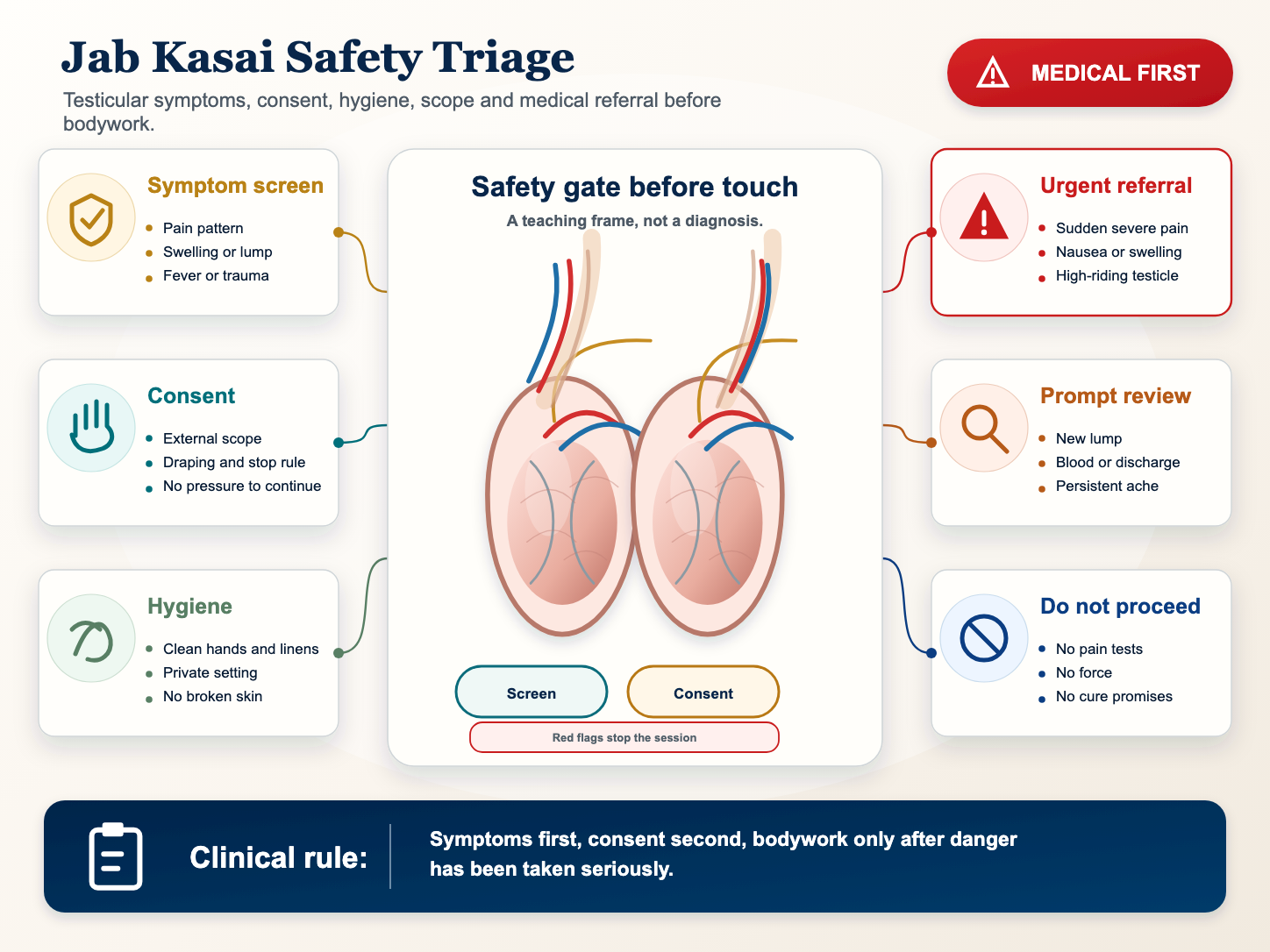
This visual map connects What Is จับกษัย? to anatomy, symptom triage, professional care and the limits of bodywork claims.
- 01
Observe the pattern
Clarify whether the goal is comfort, cultural practice, ทางเพศ สุขภาวะ or a ทางการแพทย์ claim.
- 02
Check สัญญาณอันตราย
Sudden severe เกี่ยวกับอัณฑะ อาการปวด, swelling, nausea, trauma or a new lump is not a massage topic.
- 03
Choose the care path
Urgent care, urology, ultrasound or ภาวะเจริญพันธุ์ assessment may be needed depending on the pattern.
- 04
Keep clear boundaries
ความยินยอม, hygiene, pressure limits, contraindications and referral rules must be explicit.
หน้านี้ครอบคลุมอะไร
ความหมาย การตั้งชื่อ บริบททางวัฒนธรรม และการวางกรอบสมัยใหม่อย่างระมัดระวังของจับกษัยในฐานะประเพณีความเป็นอยู่ที่ดีของอุ้งเชิงกรานชายไทย
ประเด็นสำคัญ
- การจับ กาไซ ปรากฏทางออนไลน์ในฐานะประเพณีกายบำบัดอุ้งเชิงกรานและลูกอัณฑะของผู้ชายชาวไทย แต่หลักฐานทางการแพทย์ที่เผยแพร่นั้นมีจำกัด
- ควรอธิบายว่าเป็นความเป็นอยู่ที่ดีทางวัฒนธรรมหรือการออกกำลังกายแบบดั้งเดิม ไม่ใช่วิธีรักษาที่ได้รับการพิสูจน์แล้ว
- ผู้ประกอบวิชาชีพที่จริงจังควรอธิบายความยินยอม ขอบเขต สุขอนามัย ข้อห้าม และการส่งต่อไปยังการดูแลสุขภาพ เมื่ออาการบ่งบอกถึงโรค
ประเพณีที่ต้องจัดกรอบอย่างระมัดระวัง
จับกษัย แนะนำให้รู้จักกับความยับยั้งชั่งใจ เนื่องจากเป็นธรรมเนียมปฏิบัติเกี่ยวกับความเป็นอยู่ที่ดีของอุ้งเชิงกรานและลูกอัณฑะของผู้ชายชาวไทยที่อธิบายไว้ทางออนไลน์ในรูปแบบต่างๆ ไม่ใช่เป็นวิธีการรักษาทางการแพทย์ที่ได้รับการพิสูจน์แล้ว ความแตกต่างดังกล่าวช่วยปกป้องผู้อ่าน ผู้ปฏิบัติงาน และบริบททางวัฒนธรรม
คำอธิบายที่จริงจังควรรวมถึงความหมายของคำนี้ เหตุใดการตั้งชื่อจึงแตกต่างกัน และเหตุใดขอบเขตด้านความปลอดภัยจึงมีความสำคัญก่อนที่จะพูดคุยถึงตัวถังรถที่ละเอียดอ่อนหรือละเอียดอ่อน
- แยกคำศัพท์ทางวัฒนธรรมออกจากการวินิจฉัยทางการแพทย์
- มองหานโยบายความยินยอม สุขอนามัย การคลุมเตียง และการแนะนำผลิตภัณฑ์
- ระมัดระวังเรื่องการเจริญพันธุ์ การแข็งตัวของอวัยวะเพศ หรือการรักษาต่อมลูกหมากอักเสบ
ความหมายในภาษาธรรมดา
จับกษัย มักถูกอธิบายทางออนไลน์ว่าเป็นประเพณีกายบำบัดของผู้ชายชาวไทยที่เน้นที่ช่องท้องส่วนล่าง เชิงกราน ขาหนีบ และบางครั้งก็ที่อัณฑะ การสะกดและวิธีการที่แน่นอนนั้นแตกต่างกันไปในโรงเรียนหรือผู้ปฏิบัติงานแต่ละแห่ง ดังนั้นคำจำกัดความที่รับผิดชอบมากที่สุดจึงกว้างมากกว่าที่จะสมบูรณ์ เป็นศัพท์ทางวัฒนธรรมและความเป็นอยู่ที่ดีก่อนที่จะเป็นศัพท์ทางการแพทย์ นั่นสำคัญเพราะคำอธิบายทางอินเทอร์เน็ตจำนวนมากเปลี่ยนจากภาษาดั้งเดิมไปเร็วเกินไปไปสู่คำมั่นสัญญาเกี่ยวกับการเจริญพันธุ์ ฮอร์โมนเพศชาย การแข็งตัวของอวัยวะเพศ หรือโรคต่อมลูกหมาก
คำจำกัดความที่รอบคอบควรระบุสิ่งที่เป็นประเด็นโดยไม่แสร้งทำเป็นว่าข้อกล่าวอ้างทุกข้อได้รับการพิสูจน์แล้ว จับกษัยอาจนำเสนอเป็นวิธีการสนับสนุนการผ่อนคลาย การรับรู้ของร่างกาย ความรู้สึกสบายในอุ้งเชิงกราน หรือความเข้าใจแบบดั้งเดิมเกี่ยวกับการไหลของพลังงาน คำอธิบายเหล่านั้นอาจมีความหมายในสภาพแวดล้อมทางวัฒนธรรม ไม่ควรเขียนใหม่เพื่อเป็นหลักฐานว่าเทคนิคแบบแมนนวลสามารถวินิจฉัยโรค ลดภาวะมีบุตรยาก เปลี่ยนระดับฮอร์โมน หรือรักษาภาวะหลอดเลือดหรือระบบประสาทได้
คำว่า "คำจำกัดความ" ก็ต้องมีขอบเขตเช่นกัน เพจที่กำหนด จับกษัย ไม่ควรกลายเป็นคำอธิบายที่เร้าอารมณ์ของการติดต่ออย่างใกล้ชิด กายวิภาคศาสตร์ที่ละเอียดอ่อนสามารถพูดคุยกันอย่างจริงจัง ในทางคลินิก และด้วยความเคารพ คุณลักษณะที่กำหนดควรได้รับการแจ้งความยินยอม บริบทสำหรับผู้ใหญ่เท่านั้น สุขอนามัย ขอบเขตที่ชัดเจน การกดดันอย่างอ่อนโยน และสิทธิ์ในการหยุด ไม่ใช่การรักษาความลับ ความกดดัน หรือการตลาดที่โลดโผน
- ใช้จับกษัยเป็นศัพท์เกี่ยวกับความเป็นอยู่ที่ดีและการออกกำลังกายแบบดั้งเดิม ไม่ใช่เป็นการวินิจฉัย
- อธิบายขอบเขตเซสชั่นที่เป็นไปได้โดยไม่ต้องรับรองผลการรักษาพยาบาล
- มองเห็นความยินยอม สุขอนามัย การคลุม และข้อห้ามตั้งแต่เริ่มต้น
ภาษาดั้งเดิมกับภาษาทางการแพทย์
ระบบตัวถังแบบเดิมๆ มักใช้คำต่างๆ เช่น พลังงาน การไหล การปลดปล่อย ความร้อน ความเมื่อยล้า ความมีชีวิตชีวา หรือเส้นทางที่ถูกปิดกั้น คำพูดเหล่านั้นอาจเป็นส่วนหนึ่งของวัฒนธรรมของผู้ปฏิบัติงาน สายเลือดการสอน หรือประสบการณ์ของลูกค้า การแพทย์สมัยใหม่ใช้คำศัพท์ที่แตกต่างกัน: หลอดเลือด เส้นประสาท ฮอร์โมน พารามิเตอร์ของอสุจิ การอักเสบ การติดเชื้อ การบาดเจ็บของเนื้อเยื่อ กลไกความเจ็บปวด และบริบททางจิตวิทยา ทั้งสองคำศัพท์ไม่ควรผสมกันอย่างไม่ระมัดระวัง
ตัวอย่างเช่น บุคคลอาจรู้สึกอบอุ่นขึ้น สงบขึ้น หรือตระหนักถึงความตึงเครียดในอุ้งเชิงกรานมากขึ้นหลังจากออกกำลังกายเบาๆ ประสบการณ์ส่วนตัวนั้นถือเป็นประสบการณ์ ไม่ได้พิสูจน์ว่าจำนวนอสุจิดีขึ้น ฮอร์โมนเทสโทสเทอโรนเพิ่มขึ้น การไหลเวียนของเลือดเปลี่ยนแปลงไปในทางที่มีความหมายทางคลินิก หรือการติดเชื้อหายไป ไซต์นี้จึงถือว่าภาษาดั้งเดิมเป็นวัฒนธรรมและประสบการณ์ เว้นแต่คำกล่าวอ้างจะได้รับการสนับสนุนจากหลักฐานทางการแพทย์
ความแตกต่างนี้ช่วยปกป้องผู้อ่านที่มาถึงด้วยอาการจริง หากผู้ชายมีอาการปวดอัณฑะอย่างกะทันหัน มีก้อนใหม่ บวม มีไข้ ปัสสาวะไม่ออก ปัสสาวะเป็นเลือด ปวดกระดูกเชิงกรานอย่างรุนแรง หรือมีการเปลี่ยนแปลงการแข็งตัวของอวัยวะเพศอย่างต่อเนื่อง ขั้นตอนถัดไปที่รับผิดชอบคือการประเมินทางคลินิก จับกษัยอาจพูดคุยกันเป็นประเพณีได้ แต่ไม่ควรชะลอการดูแลอย่างเร่งด่วนหรือจำเป็น
เพจจริงจังควรรวมอะไรบ้าง
หน้าการศึกษาที่จริงจังเกี่ยวกับจับกษัย ควรตอบคำถามเชิงปฏิบัติก่อนที่จะใช้ภาษาบทกวี บริเวณใดของร่างกายที่อาจเกี่ยวข้อง? งานเป็นงานภายนอกเท่านั้น? ได้รับความยินยอมอย่างไร? การเดรปจัดการอย่างไร? ใช้มาตรฐานด้านสุขอนามัยอะไรบ้าง? อาการอะไรหมายความว่าไม่ควรเกิดขึ้น? ไม่มีการเรียกร้องอะไรบ้าง? คำถามเหล่านี้ไม่ใช่อุปสรรคต่อประเพณี พวกเขาทำให้ประเพณีปลอดภัยยิ่งขึ้นในการพูดคุยในสภาพแวดล้อมสมัยใหม่
หน้าดังกล่าวควรอธิบายด้วยว่าคุณภาพการฝึกอบรมแตกต่างกันไป เว็บไซต์ที่สวยงาม ภาษาแห่งจิตวิญญาณ หรือประวัติของผู้ประกอบวิชาชีพที่มีความมั่นใจไม่ได้พิสูจน์ความสามารถ ผู้อ่านควรมองหาคำตอบที่ชัดเจนเกี่ยวกับขอบเขต ข้อห้าม การอ้างอิงถึงการดูแลสุขภาพ และขอบเขตทางวิชาชีพ หากผู้ประกอบวิชาชีพไม่สามารถอธิบายสิ่งที่พวกเขาจะทำ สิ่งที่พวกเขาจะไม่ทำ และเมื่อใดที่พวกเขาจะปฏิเสธหรือเลื่อนเซสชั่น ลูกค้าไม่มีข้อมูลเพียงพอที่จะยินยอม
การวางกรอบที่ปลอดภัยที่สุดคือการเจียมเนื้อเจียมตัว จับกษัย สามารถแนะนำได้ในฐานะหัวข้อกายบำบัดสำหรับผู้ใหญ่ โดยได้รับความยินยอม และได้รับอิทธิพลทางวัฒนธรรมซึ่งเกี่ยวข้องกับความเป็นอยู่ที่ดีของอุ้งเชิงกรานของผู้ชาย ไม่ควรขายเป็นยารักษาโรคหย่อนสมรรถภาพทางเพศ ต่อมลูกหมากอักเสบ ภาวะมีบุตรยาก ปวดกระดูกเชิงกรานเรื้อรัง เส้นเลือดขอด ฮอร์โมนเทสโทสเทอโรนต่ำ หรืออาการใดๆ ที่ต้องได้รับการวินิจฉัย
- หน้าคำจำกัดความควรมีข้อยกเว้นด้านความปลอดภัย ไม่ใช่เฉพาะสิทธิประโยชน์เท่านั้น
- ไม่ควรเบลอเทคนิคภายนอกและภายใน
- ควรส่งต่ออาการทางการแพทย์ไปยังแพทย์ที่มีคุณสมบัติเหมาะสม
อ้างอิงและอ่านเพิ่มเติม
ข้อมูลอ้างอิงด้านล่างไม่ใช่ข้อพิสูจน์ว่า จับกษัย เป็นวิธีการรักษาที่ได้มาตรฐาน สิ่งเหล่านี้รวมไว้เพื่อชี้แจงมาตรฐานที่กว้างขึ้นที่ใช้ในไซต์นี้: ควรหารือถึงหลักปฏิบัติแบบดั้งเดิมโดยคำนึงถึงความปลอดภัยและกฎระเบียบ ในขณะที่ภาวะเจริญพันธุ์และอาการอัณฑะเร่งด่วนเป็นแนวทางการดูแลสุขภาพตามหลักฐานเชิงประจักษ์
- องค์การอนามัยโลก - ยุทธศาสตร์การแพทย์แผนโบราณ พ.ศ. 2557-2566
- แนวทาง AUA/ASRM - การวินิจฉัยและการรักษาภาวะมีบุตรยากในผู้ชาย
- แนวทาง NICE NG257 - ปัญหาการเจริญพันธุ์: การประเมินและการรักษา
- NHS ของ Guy และ St Thomas - ภาพรวมการผ่าตัดบิดลูกอัณฑะ
รายการตรวจสอบผู้อ่านก่อนดำเนินการ
ก่อนที่จะดำเนินการในหน้าใดๆ เกี่ยวกับจับกระไสเป็นประเพณีความเป็นอยู่ที่ดีของชายไทย ผู้อ่านควรชะลอการตัดสินใจลง คำถามที่ปลอดภัยที่สุดไม่ใช่ "สิ่งนี้ฟังดูน่าสนใจหรือไม่" แต่ "ฉันเข้าใจหรือไม่ว่ามีอะไรเสนอ อะไรบ้างที่ไม่รวม และปัญหาใดที่ฉันพยายามแก้ไขจริงๆ" นี่เป็นสิ่งสำคัญอย่างยิ่งสำหรับบุคคลที่พยายามทำความเข้าใจคำนี้ก่อนที่จะเปรียบเทียบผู้ประกอบวิชาชีพหรือการกล่าวอ้าง การตัดสินใจที่ชัดเจนเริ่มต้นด้วยการแยกความอยากรู้อยากเห็น ความรู้สึกไม่สบาย อาการ ความสนใจทางวัฒนธรรม และความห่วงใยทางการแพทย์ออกจากกัน
คำถามที่สองคือข้อกังวลนี้เกี่ยวข้องกับกายบำบัดหรือไม่ หากปัญหาประกอบด้วยอาการปวดอัณฑะ ปวดกระดูกเชิงกราน คำถามเกี่ยวกับการเจริญพันธุ์ การเปลี่ยนแปลงของการแข็งตัวของอวัยวะเพศ อาการทางเดินปัสสาวะ หรือปัญหาเกี่ยวกับต่อมลูกหมาก หน้านี้ควรแนะนำผู้อ่านเกี่ยวกับการดูแลสุขภาพที่มีคุณสมบัติเหมาะสม แทนที่จะไปพบแพทย์เพื่อดูแลสุขภาพ นั่นไม่ใช่จุดยืนที่ต่อต้านประเพณี เป็นขอบเขตที่ป้องกันไม่ให้มีการใช้การออกกำลังกายแบบดั้งเดิมหรือแบบใกล้ชิดเพื่อทดแทนการวินิจฉัย การดูแลอย่างเร่งด่วน หรือการรักษาตามหลักฐานเชิงประจักษ์
คำถามที่สามคือผู้ประกอบวิชาชีพสามารถอธิบายขีดจำกัดและผลประโยชน์ได้หรือไม่ ผู้ประกอบวิชาชีพที่จริงจังสามารถบอกได้ว่าพวกเขาจะปฏิเสธเซสชันเมื่อใด จะอ้างอิงเมื่อใด พื้นที่ของร่างกายใดอยู่นอกขอบเขต วิธีรักษาความยินยอม และวิธีจัดการสุขอนามัย ผู้ปฏิบัติงานที่สามารถอธิบายได้เฉพาะการเปลี่ยนแปลง การปลดปล่อย หรือความมีชีวิตชีวา กำลังละทิ้งข้อมูลด้านความปลอดภัยที่สำคัญที่สุดไว้ในการสนทนา
- ขอบเขตเซสชั่นสามารถอธิบายเป็นภาษากายวิภาคธรรมดาได้หรือไม่?
- ธงสีแดงและข้อห้ามสามารถมองเห็นได้ก่อนทำการจองหรือไม่?
- การกล่าวอ้างเกี่ยวกับการผ่อนคลายและการรับรู้ทางร่างกาย หรือเกี่ยวกับการรักษาอาการทางการแพทย์หรือไม่
- ผู้อ่านรู้หรือไม่ว่าต้องทำอย่างไรหากเกิดความเจ็บปวด ความทุกข์ทรมาน หรือความสับสนในขอบเขต?
JABKASAI วางกรอบหัวข้อนี้อย่างไร
JABKASAI ใช้กฎเกณฑ์บรรณาธิการสำหรับหัวข้อที่ละเอียดอ่อน: ยิ่งมีการกล่าวอ้างทางการแพทย์มากเท่าไร ก็ยิ่งต้องการหลักฐานมากขึ้นเท่านั้น ความหมายทางวัฒนธรรม ประเพณี ภาษาพิธีกรรม การพักผ่อน และประสบการณ์ส่วนตัวสามารถพูดคุยด้วยความเคารพได้ การกล่าวอ้างเกี่ยวกับการเจริญพันธุ์ ฮอร์โมนเพศชาย การติดเชื้อ การบิดตัว มะเร็ง ภาวะหย่อนสมรรถภาพทางเพศ อาการปวดกระดูกเชิงกรานเรื้อรัง โรคต่อมลูกหมาก หรือการเปลี่ยนแปลงของฮอร์โมน จำเป็นต้องมีมาตรฐานที่แตกต่างกัน พวกเขาต้องการการประเมินที่มีคุณสมบัติเหมาะสม ผลลัพธ์ที่สามารถวัดได้ และความเต็มใจที่จะพูดว่า "เราไม่รู้" เมื่อหลักฐานมีจำกัด
กรอบนี้ยังได้รับการออกแบบมาเพื่อป้องกันความอับอายอีกด้วย ผู้ชายหลายคนล่าช้าในการถามคำถามเพราะกายวิภาคศาสตร์ให้ความรู้สึกเป็นส่วนตัวหรือน่าอาย หน้าการศึกษาที่ดีควรทำให้ตั้งชื่อหัวเรื่องได้ง่ายขึ้นโดยไม่เปลี่ยนความเปราะบางให้กลายเป็นเนื้อหาที่สะเทือนอารมณ์ นั่นหมายถึงคำพูดธรรมดา น้ำเสียงที่ไม่เร้าอารมณ์ การวางกรอบสำหรับผู้ใหญ่เท่านั้น รูปภาพที่ระมัดระวัง ข้อควรระวังทางการแพทย์ และไม่มีความกดดันในการจองเซสชั่นเพื่อเป็นคำตอบสำหรับทุกข้อกังวล
มาตรฐานสุดท้ายคือความมีประโยชน์ในทางปฏิบัติ หลังจากอ่านแล้ว บุคคลควรจะสามารถถามคำถามได้ดีขึ้น จดจำสัญญาณเตือน เปรียบเทียบภาษาของผู้ปฏิบัติงานได้อย่างปลอดภัยยิ่งขึ้น และทำความเข้าใจว่าแพทย์ ผู้เชี่ยวชาญด้านระบบทางเดินปัสสาวะ ผู้เชี่ยวชาญด้านภาวะเจริญพันธุ์ นักกายภาพบำบัดอุ้งเชิงกราน หรือผู้เชี่ยวชาญด้านสุขภาพจิตอาจเป็นก้าวต่อไปที่ดีกว่าเมื่อใด หากหน้าดังกล่าวแสดงข้อมูลดังกล่าว ผู้อ่านจะได้ประโยชน์แม้ว่าพวกเขาจะไม่เคยจองตัวถังก็ตาม
- ประเพณีถูกนำเสนอเป็นประเพณี ไม่ใช่เป็นการพิสูจน์โดยอัตโนมัติ
- ภาษาความเป็นอยู่ที่ดีได้รับอนุญาต แต่ภาษาในการรักษาถูกท้าทาย
- มีการพูดคุยเรื่องกายวิภาคศาสตร์ที่ละเอียดอ่อนอย่างมืออาชีพ และไม่มีการตลาดที่กระตุ้นอารมณ์ทางเพศ
- ผู้อ่านสามารถเลือกการรักษาพยาบาล ความคิดเห็นที่สอง หรือไม่เข้าร่วมก็ได้
หน้าย่อย จับกษัย แบบเจาะลึก
ส่วนนี้จะขยายหัวข้อ จับกษัย ให้เป็นคำแนะนำแบบยาวที่มุ่งเน้น คู่มือแต่ละฉบับจะถือว่าเรื่องนี้เป็นเหมือนประเพณี วัฒนธรรม และภาษาความเป็นอยู่ที่ดีเป็นอันดับแรก โดยคำกล่าวอ้างทางการแพทย์จะได้รับการจัดการด้วยความระมัดระวัง และธงสีแดงจะมองเห็นได้
บริบทเชิงปฏิบัติ
สังเกตจังหวะ ความรุนแรง สิ่งกระตุ้น และสิ่งที่เปลี่ยนแปลงสถานการณ์ ความเจ็บปวด การเปลี่ยนแปลงของปัสสาวะ การใช้ยา ความเครียด การบาดเจ็บ การออกกำลังกายล่าสุด และสุขภาพโดยทั่วไป ล้วนส่งผลต่อการทำความเข้าใจอาการหรือข้อกังวลได้
คำถามที่ควรถามต่อ
- สัญญาณใดที่จะทำให้สิ่งนี้เป็นเรื่องเร่งด่วนมากกว่ากิจวัตรประจำวัน?
- ข้อมูลใดบ้างที่ควรบันทึกไว้ก่อนที่จะพูดคุยกับแพทย์หรือผู้ประกอบวิชาชีพที่มีคุณสมบัติ?
- ข้อกล่าวอ้างใดได้รับการสนับสนุนจากหลักฐาน และข้อใดควรถือเป็นภาษาทางวัฒนธรรมหรือความเป็นอยู่ที่ดีเท่านั้น
วิธีใช้ข้อมูลนี้
ใช้คู่มือนี้เพื่ออธิบายภาษา เตรียมคำถามที่ดีขึ้น และทำความเข้าใจขอบเขต ไม่ใช่การวินิจฉัยและไม่ใช่แผนการรักษา เมื่ออาการเกิดขึ้นใหม่ รุนแรง ต่อเนื่อง หรือน่ากังวล ขั้นตอนต่อไปคือแพทย์ผู้เชี่ยวชาญ
จุดยืนด้านบรรณาธิการ
JABKASAI แยกประเพณีความเป็นอยู่ที่ดีทางวัฒนธรรมออกจากหลักฐานทางการแพทย์ ในกรณีที่หลักฐานมีจำกัด หน้าดังกล่าวจะระบุอย่างชัดเจนและหลีกเลี่ยงคำสัญญาว่าจะรักษา